
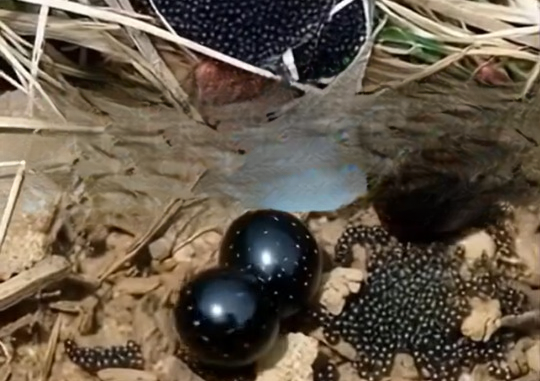
Finding a cluster of tiny eggs in your yard can raise questions about what is living around your home. The eggs might be attached to a plant, tucked beneath fallen leaves, or gathered in a sheltered spot near a fence or garden bed.
One possibility is that they belong to an insect or another small organism. Tick eggs may also come to mind, but appearance alone is not enough to reliably identify an unknown egg cluster. Many outdoor creatures produce eggs that look similar to the untrained eye.
Rather than immediately assuming you have a pest problem, take a closer look at where the eggs were found and check for other signs of activity. If ticks are a concern in your area, a few straightforward yard-maintenance and personal-protection habits can also help reduce exposure.
What Do Tick Eggs Look Like?
Female ticks lay eggs in clusters, and the eggs are generally very small. Their appearance can vary by species, but they may look smooth, rounded, and pale or brownish.
Because tick eggs are difficult to identify by sight alone, a photograph may not provide a definite answer. If you suspect the cluster contains ticks, consider asking a local agricultural extension service or pest-management professional for help.
It is also important to distinguish between finding eggs outdoors and finding ticks on people or pets. One unexplained cluster does not establish that a property has a tick infestation.
Not Every Egg Cluster Is a Pest
Gardens and yards support a wide variety of organisms. Moths, beetles, spiders, aphids, snails, and other creatures may leave eggs in different locations, including on leaves, stems, bark, and sheltered surfaces.
Some are beneficial to the garden, while others may damage plants. Treating every unfamiliar cluster as a threat can lead to unnecessary pesticide use.
Before taking action, consider:
- Where the eggs were found
- Their approximate size, shape, and color
- Whether they are attached to a plant or another surface
- Whether other insects are nearby
- Whether you have noticed plant damage or actual ticks
These details can help narrow down the possibilities.
Understanding the Tick Life Cycle
Ticks generally develop through four stages: egg, larva, nymph, and adult. After hatching, the young ticks must find suitable hosts and conditions to continue developing.
The timing and behavior of this process vary by species and environment. Temperature, moisture, vegetation, and the presence of suitable animal hosts can all influence tick activity.
Finding unidentified eggs does not mean that adult ticks will soon appear in your yard. Identification and evidence of actual tick activity are more useful than speculation based on a single discovery.
Why Ticks May Be Found Near Homes
Depending on the species, ticks can live in grassy, brushy, or wooded environments. They may be encountered in residential yards when suitable conditions and animal hosts are present.
Wildlife can carry ticks between locations, and dogs may pick them up while walking through grass or brush. Even a well-maintained yard can occasionally have tick activity.
The important point is to reduce exposure in the areas where your family and pets spend the most time, rather than assuming every outdoor organism must be removed.
What to Do When You Find Unfamiliar Eggs
Start with observation instead of immediately spraying or disturbing the area.
Take a clear photograph from a safe distance. If possible, include a ruler or another object for scale without touching the cluster. Record whether the eggs are on a plant, beneath leaves, or near a structure.
Keep children and pets away from the material until you have a better idea of what it is, particularly if you suspect it may be associated with a pest.
If the cluster remains unidentified or appears to be part of a recurring pest problem, seek advice from a qualified local professional.
Practical Ways to Reduce Tick Activity Around Your Yard
The Centers for Disease Control and Prevention recommends several landscaping measures that can help reduce exposure to ticks around homes. These include mowing lawns, clearing leaf litter, and trimming tall grass and brush near frequently used outdoor spaces. A gravel or wood-chip border between a lawn and a wooded area may also help separate recreational spaces from tick habitat. <Cite refs={[“turn695894search1″,”turn695894search4”]}/>
Maintain Grass and Vegetation
Keep grass reasonably short around patios, paths, play areas, and other places where people regularly spend time. Trim overgrown vegetation near the house and manage dense brush along lawn edges.
You do not need to remove every natural area from your property. The goal is to create a clearer separation between frequently used spaces and vegetation where ticks may be present.
Manage Leaf Litter
Accumulated leaves can provide shelter for many small organisms. Where practical, clear excessive leaf litter near entrances, patios, play areas, and paths.
You can still preserve suitable natural habitat in less frequently used parts of the property.
Reduce Unwanted Wildlife Attractants
Wildlife is a normal part of outdoor ecosystems, but certain habits may encourage animals to visit close to the house repeatedly.
Secure rubbish bins, avoid leaving pet food outside, clean up spilled birdseed, and keep compost properly managed. These measures can help reduce unnecessary wildlife activity near living spaces.
Protect Yourself and Your Pets Outdoors
Tick prevention involves more than yard maintenance. Ticks may also be carried inside on clothing, outdoor equipment, or pets.
After gardening, hiking, camping, or spending time in tall grass, check your skin, clothing, and equipment. Pay attention to areas such as behind the knees, around the waist, under the arms, around the ears, and in the hair.
Showering after coming indoors can help wash away unattached ticks and provides a useful opportunity to check your skin. Examine pets regularly, too, and ask a veterinarian which tick-prevention products are suitable for your animal. <Cite refs={[“turn695894search1″,”turn695894search4”]}/>
When using insect repellents, choose an appropriate product and follow its label. Permethrin-treated clothing and equipment can offer additional protection, but products intended for clothing should not be applied directly to skin. Never use a tick-control product on a pet unless it is specifically intended for that animal and used according to veterinary guidance or the product label.
What If You Find a Tick Attached to Your Skin?
Remove an attached tick promptly. The CDC recommends using clean, fine-tipped tweezers to grasp it as close to the skin as possible and pull upward with steady, even pressure. Avoid twisting or jerking it.
After removal, clean the bite area and your hands. Do not use heat, petroleum jelly, nail polish, or other substances to make the tick detach. <Cite refs={[“turn695894search0”]}/>
If you develop a rash, fever, or other unusual symptoms in the days or weeks following a tick bite, contact a healthcare professional and explain when and where the exposure may have occurred. Symptoms can have several causes, so medical evaluation is more appropriate than trying to diagnose an illness yourself. <Cite refs={[“turn695894search0″,”turn695894search4”]}/>
When Should You Contact a Professional?
Professional advice may be useful if you repeatedly find ticks, pets frequently bring them indoors, or you cannot identify a suspected pest.
A pest-management professional can assess the property and recommend measures appropriate to the conditions. If chemical treatment is considered, follow all product instructions and applicable local rules. Applying more pesticide than directed does not guarantee better results and may create unnecessary risks for people, pets, and the environment.
For egg clusters associated with garden plants, a local gardening expert or agricultural extension service may be better placed to identify the organism before any treatment is attempted.
A Simple Routine for a Healthier Yard
A brief inspection every week or two can help you spot changes around your property. Check lawn edges, dense vegetation, leaf accumulation, pet areas, and spaces where outdoor equipment is stored. Also look for anything that may attract wildlife close to the house.
Take photographs of unfamiliar objects before removing them, and note their location. These details can help with identification if you need professional advice.
Remember that a healthy yard is not an insect-free yard. Many insects and other small organisms play important roles in the environment. The goal is to manage genuine pest risks while preserving a reasonable balance with nature.
Final Thoughts
Finding tiny eggs in your yard can be surprising, but it does not automatically mean you have a tick problem. Many organisms produce small egg clusters, and reliable identification is the best first step before taking action.
Observe the cluster without handling it, photograph its location, and seek expert advice if you remain uncertain. If ticks are confirmed or regularly found around your property, focus on maintaining grass, managing leaf litter, trimming dense vegetation near frequently used spaces, and checking people and pets after outdoor activities.
With sensible maintenance and appropriate precautions, you can better understand what is happening in your yard and help keep your outdoor spaces comfortable for your family and pets.
Leave a Reply