
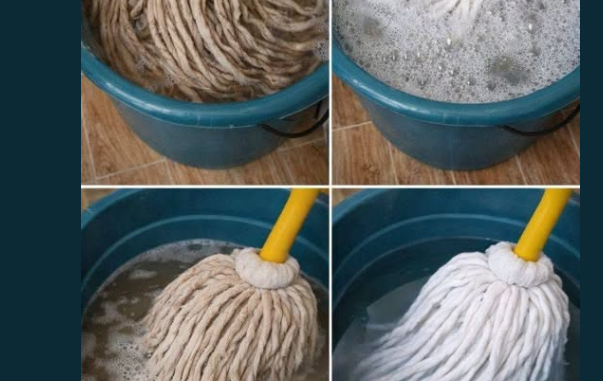
A mop is supposed to clean your floors, but after repeated use, the mop head itself can become surprisingly dirty.
Dirt, grease, dust, hair, and cleaning-product residue can gradually collect between the fibers. Eventually, the mop may develop an unpleasant smell or simply stop cleaning as effectively as it once did.
Before throwing it away and buying another one, however, there may be a simple solution already sitting in your kitchen.
White vinegar can be useful for loosening residue and helping remove unpleasant odors from some washable mop heads.
Here’s a simple method you can try.
Why Mops Become So Dirty
Every time you mop the floor, the fibers collect particles from around your home.
Even when you rinse the mop afterward, some residue can remain trapped inside.
Over time, repeated exposure to dirty water and moisture can leave the mop looking dull and smelling unpleasant.
The problem can become worse when a wet mop is immediately placed inside a closet or other poorly ventilated area.
Without enough airflow, it can take much longer to dry.
That’s why cleaning and drying your mop properly after use is just as important as cleaning your floors.
The Simple Vinegar Method
For compatible mop heads, a vinegar soak can help loosen buildup and freshen the fibers.
You’ll need:
- A bucket
- Warm or hot water appropriate for the mop material
- White vinegar
- Clean running water
Start by filling a bucket with enough water to completely cover the mop head.
Add approximately one cup of white vinegar and mix.
Place the mop head into the solution and allow it to soak for around 20–30 minutes.
During this time, the water and vinegar can help loosen some of the dirt and residue trapped within the fibers.
After soaking, remove the mop and rinse it thoroughly with clean running water.
Continue rinsing until the water runs relatively clear and the vinegar residue has been removed.
The Most Important Step: Let It Dry
Don’t immediately put a wet mop back into a dark closet.
Instead, allow it to air dry completely in an area with good ventilation.
Whenever possible, position the mop so air can circulate around the entire head.
Proper drying helps reduce the damp environment that contributes to unpleasant odors and mildew.
Only store the mop once it is completely dry.
Clean Your Mop After Every Use
You don’t necessarily need to perform a deep cleaning every time you mop.
However, giving the mop head a thorough rinse after each use is a good habit.
Remove visible hair, debris, and dirt before rinsing the fibers with clean water.
If the mop is used frequently, occasional deeper cleaning may help prevent residue from building up.
How often you need to do this depends on how frequently you mop and how dirty the floors are.
A mop used every day in a busy household will naturally need more attention than one used only occasionally.
Can Baking Soda Help?
Baking soda is another common household cleaning ingredient.
For some washable mop heads, a small amount added to water may help with stubborn odors and grime.
However, more cleaning ingredients aren’t necessarily better.
Always consider the material of your mop head and follow the manufacturer’s cleaning instructions whenever available.
Microfiber, cotton, sponge, and disposable mop heads may all have different care requirements.
Be Careful With Bleach
Bleach can be appropriate for certain cleaning and disinfecting situations, but it needs to be handled carefully.
Always follow the product label for dilution, ventilation, surface compatibility, and safety instructions.
Most importantly, never mix bleach with vinegar.
Combining bleach with acidic cleaners such as vinegar can release dangerous chlorine gas.
The same principle applies to household cleaning products generally: don’t mix different cleaners unless their labels specifically state that doing so is safe.
When in doubt, use one cleaning method at a time and rinse thoroughly.
Can You Put a Mop Head in the Washing Machine?
Sometimes.
Many modern mop heads are removable and machine washable, particularly certain microfiber varieties.
If yours is machine washable, this can be one of the easiest ways to keep it clean.
Check the care label or manufacturer’s instructions first.
Some mop materials may require a gentle wash cycle or specific water temperature, while others should not be machine washed at all.
Avoid assuming that every removable mop head can go into the washing machine.
When Should You Replace Your Mop?
Cleaning can extend the useful life of a mop, but it can’t repair a mop that is physically worn out.
Eventually, replacement becomes necessary.
Consider replacing the mop head if you notice severely frayed fibers, pieces falling apart, permanent discoloration accompanied by other deterioration, or a persistent unpleasant smell that remains even after proper washing and drying.
You should also replace it when the mop no longer cleans effectively.
The goal isn’t to keep the same mop forever. It’s to avoid throwing away a perfectly usable one simply because it needs a proper cleaning.
Don’t Forget the Mop Bucket
There’s little benefit in thoroughly cleaning a mop and then placing it back into a dirty bucket.
After mopping, empty the dirty water and rinse the bucket.
Allow the bucket to dry before storing it.
Residue can accumulate inside buckets too, particularly around the bottom and sides.
Periodically washing the bucket helps keep your overall floor-cleaning routine more hygienic.
A Simple Habit That Can Save Money
Household cleaning tools don’t always need to be replaced the moment they start looking dirty.
Sometimes they simply need maintenance.
Rinsing your mop after each use, occasionally giving compatible mop heads a deeper cleaning, and allowing everything to dry thoroughly can help extend the life of your cleaning equipment.
That means fewer unnecessary replacements and less household waste.
Final Thoughts
If your mop looks dirty or has developed an unpleasant smell, don’t automatically assume it’s time to buy another one.
For a washable mop head, a simple soak using water and white vinegar may help loosen residue and freshen the fibers.
Rinse it thoroughly afterward and, most importantly, allow it to dry completely before storage.
If the mop remains smelly, damaged, or ineffective after proper cleaning, then replacement may be the better option.
Sometimes the simplest household habits make the biggest difference—and properly cleaning the tools you use to clean your home is a great place to start.
Leave a Reply