
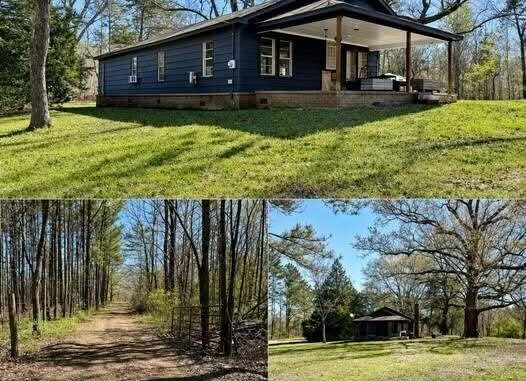
Not every country home arrives with freshly renovated rooms, modern finishes, and a move-in-ready checklist.
Some properties appeal for a different reason.
They offer land, privacy, character, and the opportunity for a new owner to gradually shape the property around their own lifestyle. A three-bedroom farmhouse in Eupora, Mississippi, sitting on approximately eight acres and featuring a small barn with a loft, fits that description.
The home needs work, but for someone who enjoys renovation projects and rural living, that unfinished quality may be part of the appeal.
A Farmhouse With Room to Become Something Personal
Older rural homes can offer something that is sometimes difficult to find in newer construction: character.
Instead of starting with a completely blank structure, a buyer may inherit an existing layout, established outdoor spaces, mature surroundings, and architectural details that can be incorporated into a renovation.
This farmhouse provides three bedrooms, giving it enough interior space for a family, guests, a home office, or other uses depending on the buyer’s needs.
The property’s current condition means that prospective buyers should approach it with realistic expectations.
This is not necessarily a home for someone looking to unpack their belongings and immediately enjoy a completely updated interior. It is better understood as a property with room for improvement.
Renovation Could Happen Gradually
One of the advantages of taking on an older property is that improvements don’t always have to happen all at once.
A new owner could begin with essential repairs and safety-related work before moving on to cosmetic projects.
Depending on the home’s actual condition, future improvements could include:
- Fresh interior and exterior paint
- Flooring replacement or restoration
- Updated lighting and fixtures
- Kitchen improvements
- Bathroom updates
- Repairs to doors and windows
- Landscaping and outdoor improvements
- Improvements to storage areas
The appropriate order will depend on the results of a professional inspection.
Before purchasing, buyers should have the home’s major systems and structure carefully evaluated. Foundation conditions, roofing, electrical systems, plumbing, septic equipment, drainage, and other components can significantly affect the total cost of a renovation.
Eight Acres Create Plenty of Possibilities
The land may be one of the property’s most distinctive features.
Approximately eight acres provide considerably more outdoor space than a typical suburban residential lot. That amount of land can give a homeowner room to explore different hobbies and uses.
Depending on local zoning rules, soil conditions, and other property restrictions, the acreage could potentially accommodate a garden, orchard, recreation area, walking paths, outdoor workspace, or other projects.
For someone interested in gardening, having additional land can be particularly appealing.
There may be room to experiment with raised beds, fruit trees, seasonal vegetables, or landscaping without having to work within the tight boundaries of a small residential yard.
However, prospective owners should confirm what activities are actually permitted before making plans.
The Small Barn Adds Another Layer of Possibility
The property also includes a small barn with a loft.
A structure like this can be useful for more than traditional agricultural purposes.
Depending on its condition and local regulations, the barn could provide storage for gardening tools, outdoor equipment, woodworking supplies, or other belongings.
It might also serve as a hobby or workshop space.
For someone who enjoys hands-on projects, having a separate structure can be valuable because it keeps certain activities outside the main house.
The loft could provide additional storage, although its condition and permitted uses should be evaluated carefully before assuming it can be used for a particular purpose.
A Rural Property Can Support Different Lifestyles
One of the interesting aspects of a property with several acres is that there isn’t necessarily one obvious way to use it.
For one household, it could become a full-time family residence.
For another, it might serve as a quieter retreat from a busy schedule.
Someone else might be more interested in gardening, outdoor hobbies, or gradually developing the land.
The amount of space allows future plans to change.
A homeowner might begin with a simple garden and later add an orchard. Another person could initially use the barn for storage before converting part of it into a workshop, provided the structure and local regulations allow such changes.
That flexibility can be one of the attractions of owning rural property.
Existing Utilities Provide a Starting Point
The farmhouse reportedly has public water, septic service, and utilities already in place.
Having established services can provide an important foundation for a property, but buyers should not assume that existing systems are automatically in perfect condition.
Septic systems, plumbing, electrical components, wells where applicable, heating systems, and other utilities should be inspected as part of the due-diligence process.
Older homes can contain systems that require updating to meet current standards.
Knowing about those issues before closing can help a buyer plan realistically rather than discovering major expenses unexpectedly.
The Character of an Older Home
Modern homes often emphasize convenience and contemporary finishes.
Older farmhouses can offer something different.
Features such as traditional layouts, older woodwork, original doors, mature landscaping, or other architectural details can provide a sense of history.
The goal of a renovation doesn’t necessarily have to be removing everything old.
A thoughtful renovation can combine modern conveniences with selected original features, creating a home that feels comfortable without completely losing its character.
Of course, which features are worth preserving depends on their condition and the homeowner’s preferences.
The Importance of Planning Before Renovating
A renovation project can become overwhelming if every project is tackled at the same time.
For a property like this, establishing priorities could make the process easier.
Safety and structural concerns generally deserve attention before cosmetic improvements. Once essential systems are addressed, a homeowner can gradually move toward improvements that make the house more comfortable and visually appealing.
A simple renovation plan might begin with:
1. Inspection and evaluation
Understand the property’s current condition before committing to major work.
2. Essential repairs
Address structural, electrical, plumbing, roofing, septic, or other critical concerns identified during inspection.
3. Basic interior improvements
Focus on flooring, paint, fixtures, and other changes that improve everyday livability.
4. Larger projects
Consider kitchen, bathroom, outdoor, or barn improvements as the budget allows.
5. Landscaping and personal touches
Once the essentials are handled, the surrounding acreage can gradually be developed according to the owner’s interests.
Rural Living Requires Practical Considerations
The appeal of eight acres and a farmhouse comes with responsibilities.
Larger properties generally require more maintenance than smaller residential lots. Grass, trees, fences, driveways, drainage, outbuildings, and other outdoor features can all require ongoing attention.
Buyers should also consider the property’s distance from grocery stores, schools, medical services, employment centers, and other frequently used locations.
Internet and cellular service should be checked as well, particularly for anyone planning to work remotely.
These considerations don’t diminish the appeal of rural living. They simply help prospective buyers understand the lifestyle they are considering.
A Property for Someone Who Enjoys the Process
The farmhouse is unlikely to appeal equally to every type of buyer.
Someone searching for a recently renovated home with modern finishes throughout may prefer a different property.
But for a person who enjoys renovation, gardening, outdoor projects, and gradually improving a home, the unfinished nature of this farmhouse could be part of its attraction.
There is something different about watching an older property change over time.
The first improvements may be practical and necessary. Later projects can become more creative.
Eventually, the property can begin to reflect the personality of the people who live there.
What Buyers Should Check Before Making a Decision
Anyone considering an older rural property should conduct thorough due diligence.
Important areas to investigate include:
- Structural condition
- Roof and foundation
- Electrical and plumbing systems
- Heating and cooling equipment
- Septic system
- Water supply
- Property boundaries
- Easements and access
- Zoning and permitted land uses
- Condition of the barn
- Driveway and road access
- Property taxes and insurance
- Estimated renovation and maintenance costs
A professional inspection can help identify issues that aren’t obvious during a casual viewing.
It is also wise to obtain estimates for major repairs before assuming that a renovation will fit within a particular budget.
More Than a Finished House
The appeal of a property like this isn’t necessarily about having everything completed on day one.
Instead, it is about having a starting point.
A three-bedroom farmhouse provides the basic structure. Eight acres provide room to explore. The barn offers additional space. Existing utilities provide an established foundation.
What happens next depends largely on the person who buys it.
One homeowner may concentrate on restoring the farmhouse. Another may focus on developing the land. Someone else may simply enjoy the privacy and open space.
There isn’t one correct vision.
Final Thoughts
This three-bedroom farmhouse in Eupora, Mississippi, offers a combination that can be difficult to find in conventional residential properties: an existing home, approximately eight acres of land, and a small barn with a loft.
The house needs work, so purchasing it would require careful inspection, realistic budgeting, and a willingness to take on improvements.
But for buyers who enjoy renovation and rural living, the unfinished nature of the property could also provide an opportunity to create something personal.
The land could eventually become a garden, an outdoor retreat, a hobby space, or simply a place to enjoy more room and privacy. The farmhouse itself could be gradually updated while retaining elements of its original character.
Sometimes a property doesn’t need to arrive perfectly finished to be interesting.
Sometimes the appeal is having enough space—and enough possibilities—to decide what comes next.
Leave a Reply