
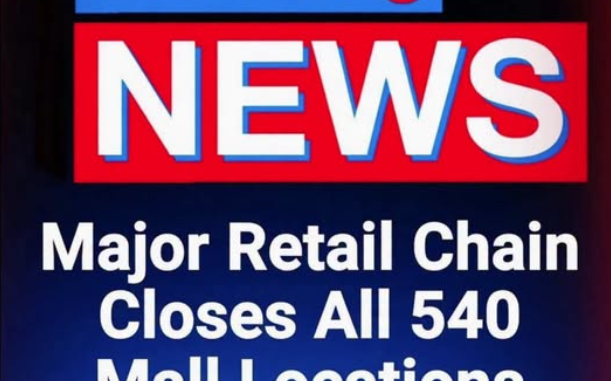
For generations, shopping for clothes meant walking through a familiar store, browsing racks with friends, trying on different styles, and leaving with a bag in hand. For many people, especially teenagers and young adults, fashion stores became more than places to make purchases. They were part of everyday life.
Today, that experience is changing.
Across the retail industry, some familiar clothing and fashion stores have closed locations, reduced their physical presence, or shifted much of their business online. These changes have created a mixture of nostalgia, uncertainty, and curiosity among shoppers who remember when visiting the mall or local shopping district was a regular part of their routine.
The closures are not simply about empty storefronts. They reflect a much larger transformation in the way people shop, how businesses operate, and what consumers expect from retailers.
The Rise of Online Shopping
One of the biggest forces reshaping fashion retail is the continued growth of e-commerce.
Online shopping allows customers to compare products, prices, sizes, colors, and reviews without traveling to a physical store. Clothing can be ordered from home and delivered directly to the customer’s door, often with a wide selection available at any hour of the day.
For consumers who value convenience, this can be difficult for traditional stores to compete with.
Physical retailers have responded by developing websites, mobile applications, loyalty programs, online-exclusive products, and convenient pickup and return options. Many businesses now operate across several channels rather than treating their stores and websites as completely separate parts of the company.
However, maintaining physical locations can be expensive. Rent, utilities, staffing, insurance, inventory management, and other operating costs can make individual stores difficult to maintain when customer traffic declines.
As a result, some retailers have decided to concentrate their resources on locations that perform particularly well while reducing their overall store footprint.
Why Store Closures Feel Different to Shoppers
For shoppers, the disappearance of a familiar clothing store can feel surprisingly personal.
A store may be connected to memories of buying a first outfit for a special occasion, shopping with parents, meeting friends after school, or discovering a particular style for the first time.
The physical environment also played a role.
Music, lighting, displays, changing rooms, seasonal decorations, and the arrangement of clothing all created an experience that cannot be completely reproduced by scrolling through a website.
Online shopping can be efficient, but it does not provide exactly the same social experience.
For some customers, visiting a store was part of the activity itself rather than simply a method of purchasing clothing.
The Human Side of Store Closures
Behind every closing storefront are employees whose lives can be affected by the decision.
Retail workers often build relationships with coworkers and regular customers. Some employees may spend years working at the same location, becoming familiar faces within their communities.
When a store closes, the consequences can include reduced hours, transfers, or job losses, depending on the company’s circumstances and the terms of the closure.
The impact can be especially significant in communities where retail provides a substantial number of entry-level and part-time jobs.
Store closures therefore involve more than business statistics. They can affect household income, career plans, friendships, and the daily routines of people who worked there.
At the same time, retail employment continues to evolve as companies create positions related to e-commerce, logistics, customer service, digital marketing, fulfillment, and technology.
The retail workforce is changing along with the industry itself.
Fashion Stores Were Also Social Spaces
One reason the disappearance of certain stores can generate strong reactions is that shopping has historically been a social activity.
For young people in particular, a trip to the mall could involve much more than buying clothes. Friends might meet for lunch, visit several stores, try on different outfits, and spend hours together.
Fashion was part of that experience because clothing can be closely connected to identity and self-expression.
A particular brand, style, or store could become associated with a specific period of someone’s life.
When those locations disappear, shoppers sometimes feel that a small part of their personal history has disappeared with them.
This is one reason photos of old shopping malls, storefronts, catalogs, and discontinued brands continue to attract attention online. They remind people of a retail environment that once felt ordinary but has become less common.
Changing Consumer Expectations
The retail industry is also responding to changes in what customers want.
Price remains important, but shoppers increasingly consider factors such as convenience, quality, durability, customer service, and a company’s values when deciding where to spend their money.
Some consumers are interested in buying fewer items that last longer. Others look for secondhand clothing, resale platforms, vintage pieces, or brands that emphasize particular environmental or production practices.
These changing preferences can create opportunities for some retailers while presenting challenges for others.
A company that built its business around frequent visits and rapidly changing styles may need to reconsider how it attracts customers in an environment where shopping habits are constantly evolving.
Physical Stores Are Not Necessarily Disappearing
Although store closures receive significant attention, the future of physical retail is not necessarily a future without stores.
Instead, many businesses are experimenting with different reasons for customers to visit in person.
Some stores emphasize personalized assistance, product demonstrations, exclusive collections, events, customization, or convenient services such as online ordering with in-store pickup.
The purpose of a physical location can therefore change.
Rather than being the only place where a customer can purchase a product, a store can become one part of a larger shopping experience.
Customers might discover an item online, visit a store to see it in person, purchase it through an app, and later return it at a physical location.
This combination of digital and physical shopping is becoming increasingly important.
What Happens to Empty Storefronts?
When a major retailer leaves a shopping center or commercial district, the space does not necessarily remain empty forever.
New businesses can eventually move in, and landlords may redesign properties to accommodate different types of tenants.
Some former retail locations are converted into restaurants, entertainment venues, offices, fitness facilities, medical services, or other businesses.
Shopping centers themselves are also changing.
Some are becoming mixed-use developments where retail exists alongside restaurants, housing, entertainment, and community spaces.
This can create a very different environment from the traditional shopping mall.
A Changing Relationship With Fashion
The transformation of fashion retail reflects a broader change in the relationship between consumers and businesses.
People can now discover trends through social media, purchase products from companies located thousands of miles away, compare prices instantly, and receive recommendations based on their online activity.
At the same time, there remains something appealing about seeing clothing in person, touching fabrics, trying on different sizes, and receiving assistance from another person.
The challenge for retailers is finding the right balance between these two experiences.
Businesses that can combine convenience with meaningful in-person experiences may continue to have a role in the changing retail landscape.
What the Future Could Look Like
The next chapter of fashion retail is unlikely to be defined entirely by either physical stores or online shopping.
Instead, the two will probably continue to overlap.
Physical stores may become smaller, more specialized, or more focused on customer experiences. Online platforms may continue to expand their selections and services. Technology may make it easier for shoppers to move between digital and physical environments.
For consumers, this means the way they shop for clothing may continue to change.
For workers, it means new opportunities may emerge alongside the challenges created by store closures.
And for communities, it raises an important question: how can social connection be maintained when familiar gathering places disappear?
The closing of a clothing store may look like a simple business decision from the outside, but its effects can reach much further. It can change the appearance of a shopping district, alter employment opportunities, and bring back memories for customers who spent important moments of their lives inside those walls.
Retail has always evolved with technology, culture, and consumer behavior. Today’s closures are another chapter in that long history.
The familiar storefront may disappear, but the way people discover, purchase, wear, and connect through fashion will continue to evolve.
Leave a Reply