
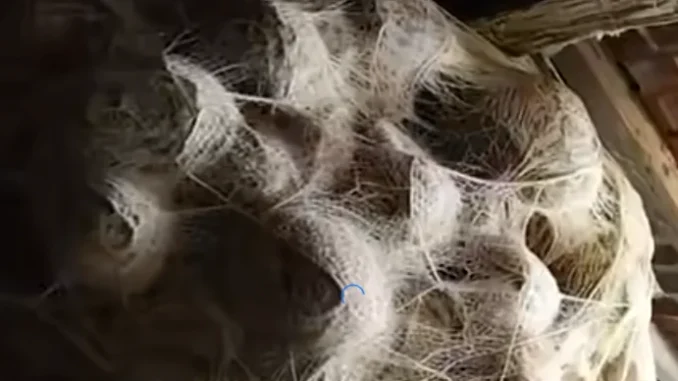
A quiet attic, roof space, or wall cavity may seem like an unlikely place for a major pest problem. But when insects find a protected area with easy access to the outdoors, a colony can sometimes develop without being noticed for weeks or even months.
Hornets can build nests in sheltered locations around homes, including roof spaces, wall cavities, trees, sheds, and other protected areas. In some cases, homeowners may not realize there is a nest nearby until insect activity suddenly becomes much more noticeable.
Understanding the warning signs can help homeowners recognize a potential problem early and avoid putting themselves at unnecessary risk.
Why Hornets Choose Hidden Areas
Social wasps and hornets generally look for protected locations where their nests can develop with limited disturbance.
Roof overhangs, attics, sheds, wall spaces, and other sheltered areas may provide protection from weather and allow insects to enter and leave through small openings.
Hornet nests are made from a paper-like material created by chewing wood fibers and mixing them with saliva. Depending on the species and location, nests can vary considerably in size and appearance.
A nest located in an area that people rarely inspect may remain unnoticed while the colony develops.
Signs That Hornets May Be Nearby
Homeowners do not always need to see the nest itself to notice that something is wrong.
Repeated insect activity around one particular location can be an important clue.
For example, homeowners may notice hornets repeatedly flying toward and away from the same opening near a roofline, vent, eave, wall, or shed.
Other possible signs include:
- Frequent hornet activity around one section of the property
- Insects entering or leaving a small opening
- Increased activity around roof edges or wall cavities
- Buzzing sounds coming from an enclosed area
- A visible nest in a protected location
- Repeated hornet sightings near a particular window or doorway
None of these signs alone proves that a colony is present, since different insects can display similar behavior. Identification by a qualified professional can help determine what is actually happening.
Why Hidden Nests Can Become a Problem
A nest located far away from people may present little immediate concern.
The situation can be different when a colony establishes itself close to frequently used areas of a home.
Attics, garages, entrances, children’s play areas, and other high-traffic locations can increase the chance of an unwanted encounter.
Hornets and other stinging insects may become defensive when their nest is disturbed. For that reason, homeowners should avoid touching, blocking, shaking, or attempting to dismantle a suspected nest.
A seemingly small nest can also contain more insects than expected, making an unplanned removal attempt particularly risky.
Why DIY Nest Removal Can Be Dangerous
One of the most important rules for homeowners is simple: do not approach or remove an active nest if you are not trained to do so.
Trying to knock down a nest, spray it from close range, block its entrance, or disturb the surrounding structure can cause insects to become defensive.
This is especially important when the nest is located inside a wall, attic, roof structure, or another difficult-to-reach area.
Professional pest-control specialists have the appropriate equipment and experience to assess the situation and determine the safest course of action.
The exact treatment depends on the species, location, size of the colony, and circumstances surrounding the infestation.
What to Do If You Suspect a Nest
If hornets repeatedly appear around the same area of your home, keep your distance and observe the activity from a safe location.
Keep children and pets away from the suspected area.
If possible, avoid unnecessary activity near the nest until the situation has been evaluated.
A qualified pest-control professional can inspect the property, identify potential entry points, and determine whether a nest is present.
If anyone in the household has a known history of severe allergic reactions to insect stings, extra caution is particularly important.
Prevention Starts With Home Maintenance
Preventing every possible insect nest is difficult, but homeowners can reduce potential nesting opportunities by keeping the property well maintained.
Regularly inspect areas such as:
- Roof edges and eaves
- Attic vents
- Wall openings
- Window and door frames
- Sheds and garages
- Damaged screens
- Gaps around utility openings
Small openings can sometimes provide insects with access to protected spaces.
Repairing damaged screens, maintaining vents, and sealing appropriate gaps can help reduce opportunities for insects to enter parts of the home.
Vegetation should also be kept reasonably maintained around frequently used areas of the property.
Weather Can Influence Insect Activity
Temperature and seasonal conditions can influence the activity of many insects.
During warmer periods, homeowners may notice greater numbers of flying insects around their properties.
Weather conditions can also affect when colonies become active and how long they remain active during the year.
Because seasonal patterns vary by region and species, homeowners should not assume that every large flying insect they see is a hornet or that every nest follows exactly the same yearly cycle.
Correct identification matters when deciding how to respond.
Hornets Also Have a Role in Nature
Although hornets can become a concern when they establish nests close to homes, they are not simply unwanted insects with no ecological purpose.
Many predatory wasps and hornets feed on other insects, including species that can become pests themselves.
They are part of natural food webs and contribute to controlling insect populations.
That is one reason responsible pest management focuses on situations where intervention is actually necessary rather than treating every insect nest as an automatic emergency.
A nest located far from people and pets may not require the same response as one positioned directly above a busy entrance.
Don’t Let Fear Lead to Risky Decisions
Discovering a suspected hornet nest can be unsettling, particularly when the nest is hidden inside a home.
However, fear can sometimes lead people to make the situation more dangerous by trying to solve the problem immediately.
The safest approach is to keep away from the suspected colony and seek appropriate professional advice.
Homeowners should also avoid relying on internet videos or unverified home remedies for dealing with active nests. What appears to work in one situation may be inappropriate for another.
The location of the nest and the type of insect involved can make a significant difference.
After a Nest Is Removed
Professional removal does not necessarily mean homeowners should stop monitoring the property.
Once the immediate problem has been addressed, it can be useful to inspect the area for possible access points.
Damaged vents, gaps around roof structures, broken screens, or openings around pipes and cables may provide future opportunities for insects to enter.
Regular maintenance can therefore be part of long-term prevention.
Homeowners should also continue watching for repeated insect activity during the warmer months.
A Simple Reminder for Homeowners
A hidden hornet colony can be difficult to detect until insect activity becomes obvious.
The most useful things homeowners can do are straightforward:
Watch for repeated activity. Keep a safe distance. Do not disturb an active nest. Protect children and pets. And contact a qualified professional when a colony is suspected.
Not every hornet sighting means there is a large infestation inside the home. But repeated activity around the same location deserves attention.
With regular property maintenance, early observation, and responsible pest management, homeowners can reduce the likelihood of an unpleasant surprise while also avoiding unnecessary harm to local wildlife.
Sometimes the most important step is not removing what you have found—it is knowing when to leave it alone and call someone who knows how to handle it safely.
Leave a Reply