
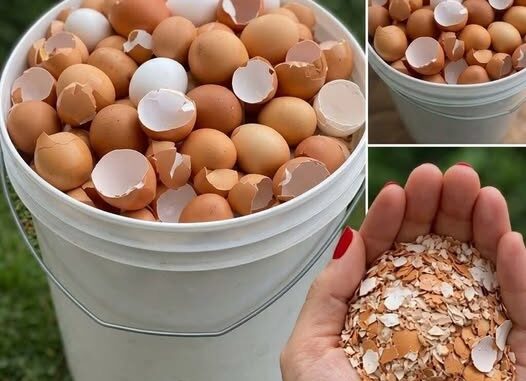
Eggshells are one of those kitchen scraps that usually end up in the trash without much thought. However, before throwing them away, there are several simple ways they can be reused around the house, garden, and for creative projects.
Because eggshells are primarily made of calcium carbonate, they contain minerals that can be useful in certain applications. Reusing them can also be a small but practical way to reduce household waste.
Add Eggshells to Your Garden
One of the most common uses for eggshells is in gardening.
Clean, crushed eggshells can be added to compost or incorporated into garden soil. As they break down, they can contribute calcium to the soil. However, eggshells decompose relatively slowly, so they shouldn’t be considered an instant fertilizer.
For best results, wash and dry the shells before crushing them into small pieces. Grinding them into a finer powder can help them break down more easily.
Gardeners should also keep in mind that soil conditions vary. A soil test is a better way to determine whether additional calcium or other amendments are actually needed.
A Simple Addition to Compost
Eggshells can also become part of a household compost system.
Instead of sending them to the garbage, crushed shells can be added alongside appropriate fruit and vegetable scraps, leaves, grass clippings, and other compostable materials.
They won’t provide all the nutrients a compost pile needs, but they can contribute minerals while helping households make better use of food scraps.
Use Them for Scrubbing
Finely crushed eggshells can work as a mild abrasive for certain cleaning jobs.
Mixed with a little water or another suitable cleaning ingredient, the crushed shells can help loosen residue from items such as some pots, pans, or cups.
Care should be taken with delicate surfaces because abrasive materials can cause scratches. It’s best to test a small, inconspicuous area first and follow the manufacturer’s cleaning recommendations for valuable or sensitive cookware.
Get Creative With Eggshell Crafts
Eggshells can also be used for simple craft projects.
Their texture makes them suitable for decorative mosaics, artwork, ornaments, and other creative activities. Pieces can be arranged into patterns and attached to suitable surfaces to create unique designs.
This can be an inexpensive activity for families, classrooms, or anyone interested in upcycling everyday materials.
Before using shells for crafts, make sure they are thoroughly cleaned and completely dry.
Start Seeds in Eggshells
Another popular gardening idea is using eggshell halves as small seed-starting containers.
After cleaning the shells, small drainage holes can be made in the bottom before adding a little potting mix and planting seeds.
Once seedlings are ready to be transplanted, the shell can be gently cracked or crushed and added to the planting area.
Eggshells are small, though, so they are best suited to seedlings that do not need much room before transplantation.
An Interesting Science Experiment
Eggshells can also provide an easy way to demonstrate a basic chemical reaction.
Place a clean eggshell in a container of vinegar and observe what happens over time. The acidic vinegar reacts with the calcium carbonate in the shell, producing bubbles as the shell gradually breaks down.
This simple experiment can introduce children and adults to concepts involving acids, minerals, and chemical reactions.
It is an inexpensive educational activity that turns an ordinary kitchen leftover into something worth observing.
What About Using Eggshells for Plants and Pests?
Eggshells are sometimes promoted as a natural way to discourage slugs and snails. While many gardeners use crushed shells around plants, their effectiveness as a reliable pest-control method can vary.
For that reason, eggshells are better viewed as an optional gardening practice rather than a guaranteed solution to pest problems.
Similarly, while eggshells contain calcium, simply placing shells around a plant does not automatically solve every calcium-related plant problem. Plant health depends on several factors, including soil conditions, watering, nutrients, and growing conditions.
Be Careful With Food and Health Uses
You may also encounter suggestions online about consuming powdered eggshells as a calcium supplement or using eggshell preparations for various health purposes.
These uses require considerably more caution than gardening or crafting. Raw eggshells can carry harmful bacteria if they are not properly handled and prepared, and homemade supplements may not provide a predictable amount of nutrients.
For that reason, eggshells should not be treated as a substitute for medically recommended supplements or treatments. Anyone considering using eggshell powder for dietary purposes should consult a qualified healthcare professional first.
The same caution applies to using eggshell preparations on skin, teeth, or other parts of the body.
A Small Step Toward Less Waste
Eggshells may seem insignificant, but finding useful ways to reuse them can encourage a more thoughtful approach to household waste.
They can be added to compost, used in certain gardening projects, incorporated into crafts, or even turned into a simple science experiment. Not every method will be suitable for every household, but many require little more than cleaning, drying, and a bit of creativity.
The next time you crack an egg, consider whether the shell really needs to go straight into the trash. With a little imagination, an ordinary kitchen leftover can have another useful purpose.
Leave a Reply