
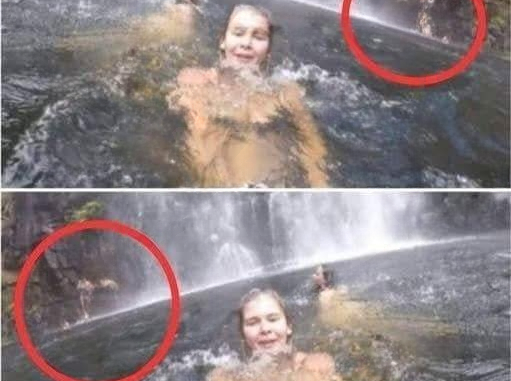
At first glance, an ordinary photograph may seem completely straightforward. You notice the main subject, recognize the setting, and move on without giving the image much thought. But after someone asks you to look again, a small detail in the background may suddenly become impossible to ignore.
It could be an unusual shadow, a reflection in a window, an object partly hidden behind another object, or a shape that looks different when viewed from another angle.
The photograph has not changed. What has changed is your attention.
This is one reason ordinary photographs can be surprisingly interesting. Our brains naturally focus on certain parts of a scene while overlooking others, making a second look worthwhile.
Why Do We Miss Details in Photographs?
Human vision is designed to help us process the world efficiently. Rather than examining every object with equal attention, the brain prioritizes information that seems most relevant.
When you look at a photograph of a crowded street, for example, you may immediately notice the people, vehicles, and buildings. A small sign, a distant figure, or an unusual object near the edge may receive little attention.
This does not necessarily mean the detail was invisible. It may simply have been outside your immediate focus.
Once someone points it out, your attention shifts toward that part of the image, making the detail easier to recognize.
Seeing Something Is Not the Same as Noticing It
A person can look directly at part of an image without consciously registering every feature within it.
Imagine a photograph of a garden. You might focus on the flowers and trees while overlooking a bird resting near a fence. Another viewer who enjoys birdwatching may notice the bird immediately.
Both people are looking at the same photograph, but their attention is directed toward different things.
Personal interests, previous experiences, and expectations can all influence what we notice first. That is why two people can examine the same picture and come away with different observations.
Why Background Details Can Change a Photograph
The background often provides information that helps explain the main subject.
Buildings, signs, windows, vehicles, furniture, and other objects can reveal more about the setting than the foreground alone.
Sometimes these details are deliberately included by the photographer. In other cases, they appear by coincidence.
A reflection might reveal a building outside the frame. A distant object might explain an unusual shadow. A partially obscured sign might provide context about where the photograph was taken.
Looking beyond the central subject can therefore help viewers understand an image more completely.
Reflections Can Create Unexpected Shapes
Reflections are a common source of visual confusion.
Windows, mirrors, water, and polished surfaces can show objects that are not directly visible from the camera’s position. Depending on the angle and lighting, these reflections may be faint, distorted, or partially hidden.
A window might reflect trees, a passing vehicle, or a person standing behind the photographer. On water, ripples can distort reflected shapes and make familiar objects appear unfamiliar.
When a photograph contains something that seems out of place, checking nearby reflective surfaces may help explain what you are seeing.
Shadows Can Be Deceptive
Lighting can dramatically change the appearance of an ordinary scene.
A tree branch may cast a shadow that resembles an animal. A person standing outside the frame may create a shape on a wall. During sunrise or sunset, long shadows can stretch across the ground and appear much larger than the objects producing them.
Before identifying a dark shape as a separate object, consider where the light is coming from and what nearby objects might be casting shadows.
Sometimes the simplest explanation is also the correct one.
Perspective Can Make Objects Appear Connected
Photographs turn a three-dimensional world into a flat image. As a result, objects at different distances can appear to overlap or line up in unexpected ways.
A tree branch may appear to extend from someone’s head. A distant building might seem to rest directly on top of a vehicle. Two people standing at different distances may appear to be touching when they are actually several feet apart.
These effects are usually caused by perspective rather than anything unusual happening in the scene.
Looking at the surrounding objects can help reveal their actual positions.
Why Scale Can Be Difficult to Judge
The apparent size of an object depends partly on its distance from the camera.
A small object close to the lens may look larger than a much bigger object farther away. Without familiar reference points, viewers may struggle to estimate the real size of something.
This can make an ordinary photograph seem strange until the viewer recognizes a nearby object that provides a sense of scale.
When examining an unusual image, look for familiar objects such as doors, chairs, vehicles, or people that can help establish perspective.
Image Quality and Cropping Matter
Photographs shared online are often resized, compressed, or cropped. These changes can affect how much detail remains visible.
Compression may blur fine textures or merge small shapes together. Dark areas can lose detail, while bright areas may become difficult to distinguish. Cropping can remove surrounding objects that would otherwise explain an unusual feature.
Whenever possible, compare a suspicious-looking image with the original, higher-resolution photograph.
Zooming in may help, but excessive digital enlargement can make an image look less clear. Editing tools also have limitations: they cannot guarantee accurate details that were never captured in the original photograph.
Could It Be an Optical Illusion?
An optical illusion occurs when visual information is perceived differently from the way we might initially expect.
Photographs can produce several familiar effects:
- Two separate objects appear to form one shape.
- A shadow resembles a person or animal.
- A reflection creates the impression of a second object.
- Overlapping objects appear connected.
- A pattern resembles a familiar face.
One related phenomenon is called pareidolia, the tendency to recognize familiar patterns, particularly faces, in random or ambiguous shapes.
People may see faces in clouds, tree bark, rocks, buildings, or shadows even when no actual face is present.
This tendency is a normal feature of human perception. It can make an image seem mysterious without indicating that anything unusual is actually there.
Why People Interpret the Same Image Differently
Experience influences what people notice.
A photographer may pay attention to lighting, composition, and reflections. Someone familiar with wildlife might recognize an animal partly concealed by vegetation. An architect may notice a structural feature that other viewers overlook.
These differences can be useful because they encourage people to examine an image from multiple perspectives.
However, an interpretation is not necessarily correct just because it seems convincing. When a detail is blurry or ambiguous, it is better to acknowledge uncertainty than to identify it confidently without enough evidence.
A Simple Way to Examine a Photograph More Carefully
If a picture contains a detail you cannot explain, try examining it systematically.
1. Start with the entire scene. Identify the main subject and understand the general setting before focusing on one small area.
2. Check the background. Look behind people, objects, and structures that initially attract your attention.
3. Inspect the edges. Examine all four corners for partially visible objects or details that may have been overlooked.
4. Look for reflections. Check windows, mirrors, water, and shiny surfaces.
5. Study the lighting. Consider whether an unusual shape could be a shadow.
6. Check perspective. Look for objects that appear connected only because they line up from the camera’s position.
7. Compare image quality. If available, examine the original photograph rather than relying only on a compressed social media version.
8. Keep alternative explanations in mind. Do not settle on one interpretation until the available details support it.
This process can make image viewing more engaging while reducing the chance of misinterpreting an ordinary object.
Why Hidden-Detail Pictures Capture Our Attention
Photographs that invite people to look twice create a simple mental challenge. Viewers begin searching for information that does not immediately fit their first impression.
Curiosity increases when something is almost recognizable but remains uncertain. People may zoom in, compare observations, or ask others what they see.
That experience can make an ordinary image memorable, even when the explanation is simple.
The appeal does not have to depend on danger, a shocking discovery, or a dramatic secret. Sometimes the enjoyment comes from realizing that a familiar scene contains more information than we initially noticed.
Be Careful With Claims About Viral Images
Online posts sometimes describe an ordinary photograph as containing a shocking or mysterious discovery. But a dramatic caption does not establish what an image actually shows.
A blurry shape should not automatically be identified as a person or animal. A shadow should not be treated as proof that another object is present. An edited or cropped photograph may also leave out important context.
Artificial intelligence tools can suggest possible interpretations, but their answers are not always reliable, especially when images are unclear.
For important questions, compare the photograph with its original source and look for independent evidence before accepting a particular explanation.
Final Thoughts
An ordinary photograph can reward a second look because human attention is selective. Reflections, shadows, perspective, overlapping objects, and image quality can all influence what we notice and how we interpret it.
The best approach is to examine the entire scene, pay attention to the background, and consider more than one explanation for an unusual detail.
Not every mysterious-looking shape has a dramatic story behind it. Sometimes it is simply a trick of light, an unusual camera angle, or an object that was easy to overlook.
The next time a photograph seems completely ordinary, take a moment to study it more carefully. You may notice something new—not because the image has changed, but because you are finally paying attention to a part of it you missed the first time.
Leave a Reply