
When my mother died, she left me something that was worth far more than its financial value.
She left me a place filled with memories.
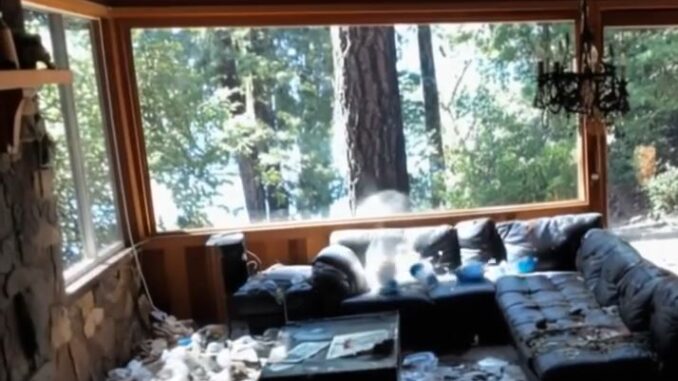
The lake house was small and surrounded by trees. A narrow path led toward the water, and the quiet shoreline was one of Mom’s favorite places. To anyone else, it might have looked like an ordinary vacation property.
To me, it was where I had spent some of the happiest years of my childhood.
Mom had decorated almost everything herself. She chose the curtains, made quilts for the bedrooms, painted small pictures for the walls, and filled the shelves with souvenirs from places she had visited.
Nothing was particularly expensive.
But every object seemed to carry a story.
After she died, the lake house became the place I went whenever I needed to feel close to her.
I cleaned it, repaired whatever needed fixing, and tried to maintain it the way she had left it.
Then my father remarried.
And slowly, the way our family viewed the lake house began to change.
A Difference of Perspective
My father’s new wife, Carla, never understood why I felt so strongly about the things Mom had left behind.
She sometimes described Mom’s decorating style as outdated.
She laughed at some of the handmade artwork.
Once, I discovered that several of Mom’s quilts had been moved out of the lake house because Carla thought they took up too much space.
I was hurt.
Those quilts weren’t simply old blankets.
Mom had spent countless hours making them. Some contained pieces of fabric connected to family trips and important moments in her life.
When I explained why they mattered to me, Carla seemed genuinely confused.
To her, they were household objects.
To me, they were pieces of my mother.
That difference never completely disappeared.
The Lake House Becomes Mine
Because of the way my mother’s estate had been arranged, the lake house eventually became my property.
There were legal steps that had to be completed, and I had to wait until I reached the required age before everything could officially be transferred.
When I turned 21, the ownership was finalized.
I remember standing inside the house that day with a strange mixture of emotions.
It was officially mine.
Yet it still felt like Mom’s house.
I promised myself that I would take care of it.
I also explained something clearly to my father and Carla.
The lake house was private.
I didn’t want it used for parties or large gatherings without speaking to me first.
My father seemed to understand.
Carla smiled and said she understood too.
I wanted to believe her.
Five Years Later
Five years passed after Mom’s death.
Every June, I took time away from work around the anniversary.
I didn’t need a large memorial or a gathering.
I simply wanted to spend a quiet day at the lake house.
That year, I planned to arrive early with some food, a few books, and an old photo album Mom had assembled.
I imagined sitting on the porch and looking through the pictures while listening to the water.
The drive there was peaceful.
Trees lined the road, and eventually the lake appeared between them.
Then I saw the cars.
One was parked near the house.
Then another.
Then another.
I slowed down.
Something felt wrong.
As I got closer, I could hear music.
There was laughter coming from the porch.
I recognized Carla’s voice.
I pulled over and sat in my car for several seconds.
I didn’t understand what was happening.
Then I realized.
Someone was having a party at my lake house.
And nobody had asked me.
The House Didn’t Look the Same
I walked toward the property slowly.
Several people were standing on the porch. Others were inside.
Chairs had been moved from the living room.
There were food containers and glasses scattered around.
The peaceful atmosphere I had always associated with the house had disappeared.
Then I noticed one of Mom’s embroidered pillows sitting outside.
Someone had taken it from the living room and placed it on a chair.
I knew how many hours Mom had spent making that pillow.
I looked around and noticed other changes.
Decorations had been placed around the porch.
Furniture had been moved.
People were treating the house as though it were simply another place available for a gathering.
Then I heard Carla talking about the property.
She made a casual remark about Mom’s taste in decorating.
Several people laughed.
I stood there quietly.
My first reaction was anger.
I wanted to walk onto the porch and demand that everyone leave.
I wanted to tell them exactly what I thought.
But something stopped me.
This wasn’t only about a party.
It was about a boundary that had been ignored.
Walking Away Instead of Starting a Scene
I could have confronted Carla in front of everyone.
Instead, I returned to my car.
I sat there trying to calm down.
The date already carried enough emotional weight.
I didn’t want to turn the anniversary of my mother’s death into a family argument that everyone would remember for the wrong reasons.
So I decided to handle the situation differently.
I called the person who had helped me with the property paperwork and explained what had happened.
I wanted to know what steps I could take to make sure the house couldn’t be used without my permission.
The answer was straightforward.
I was the owner, and I could establish appropriate rules regarding access to the property, subject to any applicable legal requirements or agreements.
That gave me the clarity I needed.
I wasn’t interested in revenge.
I simply wanted control over my own home.
Protecting the Property
The next day, I began reviewing the property’s access arrangements.
I checked who had keys.
I changed the locks.
I reviewed the security system.
I organized the property documents and photographed the interior so I had a record of Mom’s remaining belongings.
It wasn’t dramatic.
There was no confrontation.
It was simply me taking responsibility for something that had been entrusted to me.
Later, I sent Carla a message.
I kept it calm.
I explained that the lake house was private property and that future visits needed to be discussed with me beforehand.
I also asked that none of Mom’s belongings be moved, used, donated, or discarded without my permission.
I ended the message with a simple request for her to respect that boundary.
Then I put my phone away.
My Father Called
A few hours later, my father called.
He wanted to know why I had changed the locks.
I explained everything.
There was a long silence.
Then he admitted that he hadn’t realized Carla had organized such a large gathering.
That surprised me.
I had assumed he knew about it.
He asked whether I really intended to keep the lake house private.
I told him that I did.
But I also explained that I wasn’t trying to push him out of my life.
I wasn’t trying to start a family feud.
I simply wanted control over my own property and respect for Mom’s belongings.
Then Dad apologized.
He admitted that he hadn’t fully understood how important the lake house remained to me.
He also acknowledged that after Mom’s death, he had tried to move forward quickly and hadn’t always recognized that I was grieving differently.
For the first time in a long time, I felt that he understood me.
Carla Finally Heard My Side
Carla eventually called me herself.
At first, she was defensive.
She said she had believed the lake house was essentially a family property.
I reminded her that it had legally been transferred to me.
She explained that she had only wanted to have a gathering.
I told her I understood that.
But understanding her intention didn’t mean I had to accept what happened.
Then she asked something that caught me off guard.
She wanted to know why I cared so much about old objects.
I thought about it before answering.
Because they belonged to Mom.
I explained that what looked like an old quilt to her represented hours of work to me.
An old painting reminded me of Mom sitting at a table with a brush in her hand.
A pillow reminded me of watching her sew.
The objects weren’t valuable because of their price.
They were valuable because they connected me to someone I had lost.
Carla became quiet.
She didn’t suddenly see everything exactly as I did.
But she finally understood that the issue wasn’t about furniture or decorations.
It was about respect.
Learning That Boundaries Aren’t Punishment
The experience taught me something important.
Setting a boundary isn’t necessarily about rejecting someone.
Sometimes it is about making expectations clear so that relationships can continue without constant conflict.
I didn’t want to spend years arguing with Carla.
I didn’t want to feel angry whenever the lake house was mentioned.
I simply wanted everyone to understand that the property belonged to me and that Mom’s belongings had meaning to me.
Once that was clear, things became easier.
Carla stopped making jokes about Mom’s belongings.
She also began asking before visiting.
Our relationship didn’t suddenly become perfect, but it became more respectful.
My Father Visits the Lake House
Several months later, Dad asked whether he could visit.
This time, he called first.
I said yes.
We sat together on the porch overlooking the lake.
For a while, neither of us spoke.
Then Dad began telling me stories about Mom.
Some were stories I already knew.
Others happened before I was born.
We laughed about some of them.
Others were harder to hear.
I realized that the lake house wasn’t only connected to my memories of Mom.
It was also part of Dad’s life with her.
The important difference was that I needed to have control over the property while still allowing room for family relationships.
That afternoon brought Dad and me closer.
The House Changed Again
Over time, I made a few changes to the lake house.
I repaired some furniture.
I replaced things that were worn out.
I organized Mom’s belongings more carefully.
I kept her quilts in a protected place.
I also created a small room where some of her most meaningful possessions could remain together.
There were photographs, letters, drawings, and a few pieces of artwork.
It wasn’t a museum.
It was simply a quiet place where I could remember her.
The rest of the house continued to evolve.
I began adding a few things of my own.
Eventually, I understood that preserving Mom’s memory didn’t mean keeping the entire property frozen exactly as it had been.
It meant protecting what mattered while allowing myself to continue living.
The Next Anniversary
A year later, I returned to the lake house on the anniversary of Mom’s death.
This time, the driveway was empty.
There was no music.
No unexpected gathering.
Just the sound of the water and the trees moving in the breeze.
I made coffee and sat on the porch with the old photo album.
The memories were still painful.
But I wasn’t thinking about the party anymore.
I was thinking about Mom.
I remembered the way she laughed.
I remembered her decorating the house.
I remembered sitting beside her while she worked on one of her quilts.
And I realized that the lake house had never really been about the building.
It was about having a place where I could remember her.
What the Experience Taught Me
Grief can change the meaning of ordinary objects.
A quilt can become a memory.
A photograph can become a connection to another time.
A house can become a place where someone’s presence still feels close.
But grief can also make people react differently.
I wanted to hold onto everything.
My father initially wanted to move on.
Neither response meant that one of us loved Mom more.
We were simply dealing with the loss in different ways.
I also learned that anger doesn’t have to determine what happens next.
My first instinct was to confront everyone.
Instead, I stepped away and thought about what I actually wanted.
I wanted the property respected.
I wanted Mom’s belongings protected.
And I wanted to maintain my relationship with my father without allowing resentment to control it.
Those goals were possible without turning the situation into a public battle.
Moving Forward
I used to think moving forward meant letting go.
Now I understand that it can mean something else.
You can carry important memories with you while still creating a new life.
I can honor my mother without refusing to change anything.
I can protect the lake house without treating it as a place frozen in the past.
And I can establish boundaries with family members without turning every disagreement into a permanent conflict.
The lake house remains part of my life.
I still visit.
Sometimes I go alone.
Sometimes Dad comes.
And occasionally, I bring someone who never knew Mom and tell them the stories behind the things inside.
Final Thoughts
When my mother left me the lake house, she gave me much more than property.
She gave me a place filled with pieces of our shared history.
When my stepmother held a party there without asking, I felt as though something deeply personal had been disregarded.
But the experience ultimately taught me that protecting a memory doesn’t require living in the past.
I didn’t need revenge.
I didn’t need a confrontation.
I needed clear boundaries and honest conversations.
The lake house is still standing among the trees, overlooking the same water Mom loved.
Her quilts are still there.
Her artwork is still on the walls.
But the house is also becoming mine.
That may be the most important part of all.
I can remember where I came from while still creating something of my own.
And whenever I sit on that porch and watch the lake, I no longer think only about what I lost.
I think about what Mom gave me—and how grateful I am that her memory still has a place in my life.
Leave a Reply