
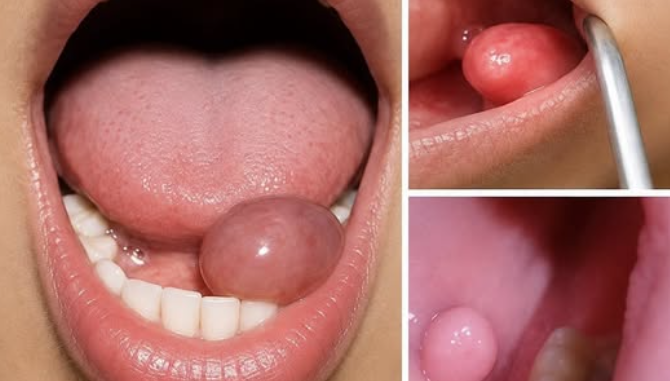
Finding a small lump, bump, or unusual sore inside your mouth can be worrying. Your first thought might be something serious, but most mouth lumps have relatively common explanations.
Accidentally biting your cheek, developing a canker sore, or having a blocked salivary gland can all create bumps that eventually disappear.
However, a mouth lump that doesn’t heal, repeatedly bleeds, changes in appearance, or occurs with other unusual symptoms deserves professional evaluation.
Here’s what you should know.
1. Canker Sores
Canker sores, also known as aphthous ulcers, are common sores that develop inside the mouth.
They usually appear on the inner lips, cheeks, gums, or tongue and may have a pale center surrounded by a red border.
Unlike cold sores, canker sores aren’t caused by the herpes virus and aren’t considered contagious.
Possible triggers include minor mouth injuries, stress, certain foods, and other factors.
Most minor canker sores improve without treatment within approximately one or two weeks.
If sores are unusually large, extremely painful, keep returning, or don’t heal as expected, consider speaking with a dentist or doctor.
2. Cold Sores
Cold sores are different from canker sores.
They’re caused by the herpes simplex virus and commonly develop around the lips, although oral herpes can affect other areas.
They may begin with tingling, itching, or burning before small fluid-filled blisters appear.
Cold sores are contagious, particularly when active.
Antiviral treatments may reduce the severity or duration of outbreaks for some people, especially when treatment begins early.
A healthcare professional can provide advice if outbreaks are frequent or severe.
3. A Mucocele
A soft, smooth bump on the inside of the lower lip may be a mucocele, sometimes called a mucous cyst.
These can develop when a small salivary duct becomes damaged or blocked.
A mucocele may look clear, pinkish, or slightly blue and can sometimes change in size.
Many disappear without treatment.
However, if the bump persists, repeatedly returns, grows, or interferes with eating or speaking, a dentist or oral healthcare professional should examine it.
Don’t repeatedly bite or attempt to pop it yourself.
4. Irritation From Biting or Dental Appliances
Sometimes a mouth lump has a very straightforward explanation.
Repeatedly biting the inside of your cheek can irritate tissue and cause it to thicken.
Braces, dentures, retainers, or a rough or broken tooth can also repeatedly rub against the same area.
Removing the source of irritation may allow the tissue to recover.
But if a lump remains after the irritation has been addressed, have it examined.
5. Benign Oral Growths
Several noncancerous growths can develop inside the mouth.
For example, an irritation fibroma may form after repeated trauma or friction.
Other types of growths can have different causes and appearances.
The problem is that identifying a mouth lesion based solely on appearance can be difficult.
A photograph or description online can’t reliably determine exactly what a growth is.
A dentist, doctor, or oral specialist may need to examine it and occasionally recommend additional testing.
Could a Mouth Lump Be Oral Cancer?
Yes, but it’s important not to panic.
Most mouth lumps and sores aren’t cancer.
However, oral cancer can sometimes begin as a persistent sore, lump, thickened area, or unusual patch that doesn’t disappear.
The most common form is squamous cell carcinoma.
Risk factors can include tobacco exposure, heavy alcohol consumption, certain HPV infections, increasing age, and other factors.
People without obvious risk factors can still develop oral cancer, which is why persistent changes deserve attention.
The Two-Week Warning Sign
One useful rule is to pay attention to how long an unexplained mouth change lasts.
Many minor injuries and common mouth sores improve relatively quickly.
If an unexplained lump, ulcer, red or white patch, or other change remains for around two weeks or longer, particularly without signs of healing, arrange an examination with a dentist or healthcare professional.
Persistence doesn’t automatically mean cancer.
It simply means the area deserves a closer look.
Other Warning Signs to Watch For
Seek professional evaluation if you notice:
- A mouth sore that doesn’t heal
- A persistent or growing lump
- Unexplained bleeding
- A persistent red or white patch
- Numbness in part of the mouth or tongue
- Ongoing mouth or throat pain
- Difficulty chewing or swallowing
- Persistent hoarseness or voice changes
- A new lump in the neck
- Unexplained loosening of a tooth
- Unexplained weight loss alongside other symptoms
Having one of these symptoms doesn’t prove that cancer is present.
Many can be caused by infections, dental problems, inflammation, or other conditions.
But they shouldn’t be ignored when persistent or unexplained.
Don’t Try to Diagnose It From a Photo
Online photographs can be helpful for learning about general conditions, but they’re not a reliable substitute for an examination.
Different oral conditions can look surprisingly similar.
Something that appears harmless in a photograph might require treatment, while something that looks frightening could turn out to be a simple irritation.
Avoid cutting, squeezing, burning, or repeatedly touching an unexplained mouth lump.
If you’re concerned, let a professional examine it.
Your Dentist Can Help
Many people think dentists only look for cavities.
They also routinely examine the gums, tongue, lips, cheeks, and other areas of the mouth.
If something looks unusual, your dentist can determine whether it needs monitoring, treatment, or referral to another specialist.
Regular dental visits therefore play an important role in maintaining overall oral health.
Reduce Your Risk
Not every oral health problem can be prevented, but certain habits can reduce risk.
Avoid tobacco products.
Keep alcohol consumption within recommended limits.
Maintain good oral hygiene.
Address broken teeth or poorly fitting dental appliances that repeatedly irritate your mouth.
And don’t ignore persistent changes simply because they aren’t painful.
Some important oral conditions may cause little or no pain in their early stages.
Frequently Asked Questions
Is every mouth lump cancer?
No. Many mouth lumps result from minor injuries, blocked salivary glands, ulcers, infections, or benign growths.
Persistence is one reason an unexplained lump should be professionally evaluated.
Can stress cause mouth sores?
Stress may be associated with canker-sore outbreaks in some people, although multiple factors can contribute.
Should I pop a bump inside my mouth?
Generally, no.
Trying to pop or cut an unexplained bump can cause bleeding, infection, or additional irritation.
When should I see a dentist?
Consider making an appointment if an unexplained mouth lump or sore hasn’t improved after approximately two weeks, keeps returning, becomes larger, or develops other concerning features.
Final Thoughts
Finding a lump inside your mouth doesn’t automatically mean something serious is wrong.
Canker sores, mucoceles, accidental injuries, irritation, and other benign conditions are common explanations.
The key is paying attention to changes.
If something appears and quickly improves, it may simply have been temporary irritation.
If it remains for weeks, grows, repeatedly bleeds, or is accompanied by difficulty swallowing, numbness, a neck lump, or other concerning symptoms, don’t continue waiting for it to disappear.
Have a dentist or healthcare professional examine it.
Early evaluation doesn’t mean assuming the worst.
It simply means giving an unexplained change the attention it deserves.
Leave a Reply