
After spending ten days away at the seaside, returning home felt surprisingly unfamiliar.
Nothing appeared to be wrong. The furniture was exactly where it had been left, the windows were closed, and there were no obvious signs that anything unusual had happened during the trip.
Still, an empty house has a different atmosphere.
Dust settles in places we normally do not notice. Rooms become quieter. Air stops circulating in the same way. Even familiar smells and sounds can seem different after several days away.
After unpacking, opening a few windows, and checking the kitchen, I eventually walked into the bathroom.
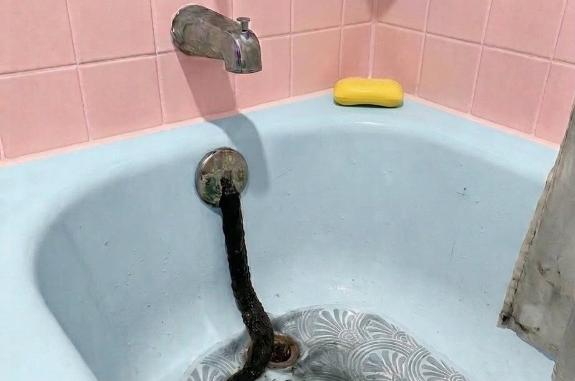
That was when I noticed something unusual.
There was a strange shape visible inside the drain.
At first, I could not tell what I was looking at. Part of it was hidden beneath the opening, while the bathroom lighting created shadows that made the shape even harder to understand.
For a moment, it looked like something that definitely did not belong there.
But the longer I looked, the more obvious it became that my first impression might not tell the whole story.
Why a Drain Can Make Ordinary Objects Look Unusual
Drains are surprisingly difficult places to identify objects.
They are often dark, narrow, and surrounded by reflective surfaces. Water can distort shapes, while residue and debris can partially cover whatever happens to be inside or near the opening.
An object viewed from above may look completely different from the same object viewed from the side.
Our brains also try to recognize unfamiliar shapes very quickly. When only part of an object is visible, the brain automatically attempts to fill in the missing information.
That can produce a surprisingly convincing but completely incorrect first impression.
A dark shape might look like an insect.
A piece of hair might resemble a small thread or plant root.
A piece of debris covered with water might appear much larger than it really is.
That is why observation should come before identification.
Start With Simple Questions
When something unfamiliar is discovered around a household fixture, there is no need to immediately assume the worst.
Instead, start with a few basic questions.
Is the object moving?
Is it floating or attached to the surface?
Is it underneath water?
How large does it actually appear?
Does it change shape when viewed from another angle?
Is there anything similar nearby?
These observations can eliminate many possibilities without requiring complicated investigation.
Sometimes simply turning on a brighter light or changing your position is enough to make an unusual object recognizable.
What Can End Up in a Household Drain?
Drains collect much more than water.
In bathroom drains, hair is one of the most common materials. Small amounts of soap residue, dust, lint, and other debris can also accumulate over time.
In kitchens, food particles and grease may enter the drainage system.
Outdoor drains can collect leaves, soil, seeds, insects, and other natural material.
Small objects can also accidentally fall into drain openings.
Because water constantly carries tiny particles from one place to another, it is not unusual to find something in a drain without immediately knowing where it came from.
An unfamiliar object therefore does not automatically indicate a serious plumbing problem.
Water Can Carry Lightweight Debris
Water is capable of moving surprisingly small and lightweight materials.
A piece of debris may be carried across a surface, enter a drain, and stop when it encounters a bend, grate, or other obstruction.
Something may also fall directly into the opening and remain there.
This means that finding an object near a drain does not necessarily tell you where it originated.
It could have come from the surrounding room, entered with water, fallen from another surface, or simply been overlooked for some time.
The location of an object provides a clue, but not always an explanation.
Why Returning From Vacation Can Make Small Details Stand Out
There was another reason the shape caught my attention: I had been away for ten days.
When people live in the same home every day, the brain becomes accustomed to its normal appearance.
Small changes can easily go unnoticed.
After being away, however, we return with a fresh perspective.
A slight discoloration may suddenly stand out.
A smell may seem stronger.
A loose object may appear unfamiliar.
A room may feel different even though nothing important has changed.
This is a normal effect of returning to a familiar environment after a break from routine.
The house may not actually be dramatically different. We are simply paying closer attention.
Lighting Can Change What We See
Bathroom lighting can make this effect even stronger.
A drain opening creates a naturally dark area, and shadows can make objects difficult to distinguish.
A reflective surface may appear brighter than it really is.
A shadow can make a small object appear larger.
Water can also reflect light in ways that change the apparent shape of something beneath it.
Changing the viewing angle can therefore be surprisingly helpful.
A flashlight can reveal details that were difficult to see under ordinary lighting. Looking from the side rather than directly above may also make the object’s outline clearer.
Sometimes what initially looks mysterious becomes completely ordinary once enough light reaches it.
A Photograph May Help
If an object is difficult to identify, taking a photograph can provide another way to examine it.
A picture from directly above may reveal its overall shape, while another image from the side can provide additional information about its depth.
A phone flashlight can also help illuminate a dark area without requiring direct contact.
However, photographs should be treated as helpful observations rather than definitive identification tools.
Camera angles can change perspective, and lighting can alter colors.
If the object appears to be an insect, animal material, or something potentially hazardous, a clear photograph may be useful when asking a qualified professional for assistance.
Avoid Touching Unknown Materials
Curiosity can make people want to reach into a drain immediately.
That is not always necessary.
If you do not know what a material is, avoid direct contact, especially if it is associated with an unusual liquid, strong odor, sharp edges, visible contamination, or anything else that appears unsafe.
There is rarely a reason to investigate an unidentified object with your bare hands.
Observation is often enough to determine what should happen next.
If the material appears potentially hazardous, professional assistance is a better option than experimentation.
Be Careful With Cleaning Chemicals
An unfamiliar object can also tempt people to pour cleaning chemicals into a drain simply to make it disappear.
That is not a good identification method.
Household drain products should be used only according to their instructions, and different cleaning chemicals should never be mixed.
Unnecessary chemical use can create fumes, damage plumbing components, or introduce a new safety problem into an otherwise harmless situation.
It is better to understand the problem first and then choose an appropriate cleaning method.
Could an Insect Be Responsible?
Bathrooms provide moisture and shelter that can attract various small organisms.
Occasionally, insects may be found around plumbing fixtures or other damp areas.
However, identifying an insect from a vague shape can be surprisingly difficult.
A wet insect, partially hidden insect, or insect viewed from above may look very different from photographs of the same species.
If something appears to be an insect, a clear image can make identification easier.
If insects repeatedly appear around a bathroom or other area of the home, it may also be worth examining moisture levels, leaks, standing water, and other conditions that could be contributing to the problem.
What Happens to a Drain When a Home Is Empty?
A home that has been unused for several days can also experience small changes in its plumbing.
Many plumbing fixtures have traps that hold water and help prevent sewer gases from entering the home.
When a fixture remains unused for an extended period, some of that water can evaporate, depending on conditions and the type of plumbing involved.
This can sometimes contribute to an unusual smell after returning from a trip.
Running water through unused fixtures can restore the water barrier in many ordinary situations.
However, a persistent sewer-like odor should not automatically be dismissed. If it continues, especially alongside drainage problems or other signs of a plumbing issue, professional inspection may be appropriate.
A Strange Object Does Not Automatically Mean a Plumbing Problem
One of the easiest mistakes is assuming that anything found near a drain must have come from inside the pipes.
That is not necessarily true.
An object may be sitting on the drain cover rather than inside the plumbing.
It may have fallen from a nearby surface.
It may have been carried by water.
It may be ordinary household debris.
The exact location matters.
Before concluding that something has come from deep inside the plumbing system, look carefully at where it is actually sitting.
This simple distinction can prevent a harmless discovery from becoming an unnecessarily complicated mystery.
Basic Maintenance Can Prevent Bigger Problems
An unusual discovery can also serve as a reminder to pay attention to household plumbing.
Bathroom drains should be kept reasonably clear of hair and accumulated debris.
Kitchen drains should be protected from excessive food waste and grease.
Outdoor drainage areas should be checked for leaves, soil, and other material that can interfere with water flow.
Regular attention can also make it easier to notice changes.
If a drain that normally empties quickly suddenly becomes slow, that is useful information.
If several drains begin slowing at the same time, the issue may deserve further attention.
Likewise, repeated backups, leaks, or persistent odors should not simply be ignored.
A Simple Check After Returning From a Long Trip
Returning home after several days away is a good opportunity for a quick household inspection.
You do not need to search for problems everywhere. A few simple checks are usually enough.
- Open windows when appropriate to improve air circulation.
- Check for unusual or persistent odors.
- Run water through sinks, showers, and other fixtures.
- Inspect the refrigerator for spoiled food or leaks.
- Look for visible signs of water damage.
- Check whether drains are flowing normally.
- Look around bathrooms and kitchens for unusual insects or moisture.
- Pay attention to unusual electrical smells, sounds, or visible damage.
The purpose is not to become suspicious of every small change.
It is simply to become familiar with the condition of your home again.
When a Drain Problem Needs Professional Attention
Some situations deserve more than simple observation.
Consider contacting a qualified plumber if water repeatedly backs up, several drains become slow at the same time, strong sewer-like odors persist, pipes appear to be leaking, or water begins appearing where it should not.
Recurring blockages can also indicate a larger issue.
A professional can determine whether the problem is limited to surface debris or whether there is a deeper plumbing concern.
Trying to force an unknown obstruction through the system with inappropriate tools or chemicals can sometimes make the situation worse.
Why Our Imagination Can Make a Small Discovery Seem Bigger
The most interesting part of seeing the strange shape was not necessarily the object itself.
It was how quickly my imagination began creating possibilities.
When we have incomplete information, the brain naturally tries to fill in the gaps.
A strange shape can become an insect.
A shadow can become something moving.
A small piece of debris can suddenly seem much more significant than it actually is.
The same thing happens online, where dramatic photographs and short videos can encourage people to make immediate assumptions before they know the full story.
Learning to pause and gather information can help prevent that reaction.
Observation Is Different From Assumption
There is an important difference between saying:
“I can see something unusual in the drain.”
and saying:
“I know what that thing is.”
The first is an observation.
The second is a conclusion.
Keeping those two steps separate is a useful habit.
First, identify what you can actually see.
Then consider the possibilities.
After that, gather more information before deciding what the object is or whether there is a problem.
This approach is useful far beyond household discoveries.
A House Continues to Change While We Are Away
Perhaps the strangest realization after returning from a trip is that a house does not completely stop changing simply because nobody is there.
Dust continues to settle.
Air moves.
Moisture changes.
Plants grow outside.
Insects continue their normal activity.
Weather affects the building.
Water remains inside plumbing fixtures.
Small pieces of debris can shift from one place to another.
All of these things are part of a home’s ordinary environment.
That is why returning after ten days can sometimes feel like entering a slightly different version of a place that was completely familiar before leaving.
Small Mysteries Are Part of Everyday Life
We often think of mysteries as something dramatic: an unexplained event, a strange discovery, or something that seems impossible to understand.
But small mysteries happen around us all the time.
A mark appears on a wall.
An unfamiliar object turns up beneath furniture.
A strange smell develops in a room.
Something appears inside a drain.
Most of the time, there is an ordinary explanation.
The challenge is that we rarely see the entire story immediately.
That is why patience matters.
Instead of deciding what something must be, it is often better to slow down, observe the details, and let the evidence guide the conclusion.
The strange shape in the drain was a reminder of something surprisingly simple: not everything unfamiliar is dangerous, and not everything mysterious has a dramatic explanation.
Sometimes, the first step toward solving a mystery is simply taking a closer look.
Leave a Reply