
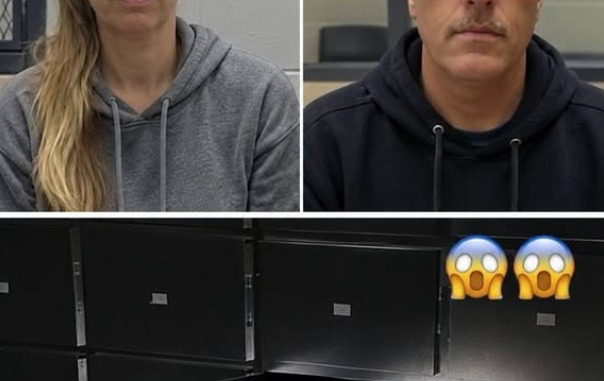
A Colorado funeral home investigation revealed a deeply troubling situation that left families questioning what happened to their loved ones after death.
Jon and Carie Hallford, the owners of Return to Nature Funeral Home, had presented their business as an environmentally conscious alternative for families seeking natural burial services. Instead, authorities later discovered hundreds of human remains being improperly stored at the facility.
According to prosecutors, 191 bodies were found at the property under conditions that raised serious concerns about how the deceased had been handled. The discovery shocked relatives who had trusted the funeral home to provide respectful and appropriate care during one of the most difficult moments of their lives.
For many families, the situation became even more distressing when questions emerged about cremation services they had already paid for.
Authorities said some families received urns that were represented as containing cremated remains. Investigators later alleged that some of those containers instead held materials such as concrete purchased from a hardware store.
The revelations transformed what should have been private moments of mourning into a painful search for answers.
A Business Built Around Natural Burial
Return to Nature Funeral Home attracted families interested in environmentally conscious funeral arrangements. Natural burial and related services can appeal to people who want alternatives to conventional embalming and traditional cemetery practices.
Families who selected the Colorado business expected their loved ones to be treated with dignity and care.
Instead, the investigation uncovered serious problems at the facility.
The case raised questions not only about the Hallfords’ conduct but also about how funeral homes are monitored and regulated. Funeral services involve an unusual level of trust because families often have little opportunity to independently verify what happens after a loved one’s death.
Financial Allegations Added to the Case
The investigation also examined the couple’s finances.
Federal prosecutors alleged that money connected to government Covid relief programs was improperly used for personal expenses. According to the allegations, funds were spent on items and activities that included vacations, jewelry and online purchases.
The financial investigation added another layer to a case that had already attracted significant attention.
Rather than being limited to questions surrounding the treatment of human remains, the case involved allegations concerning the use of money and representations made to customers.
The Hallfords Entered Guilty Pleas
Jon and Carie Hallford ultimately admitted to numerous criminal charges connected with the case.
Their guilty pleas included felony counts involving abuse of a corpse as well as federal wire fraud charges. The potential penalties are substantial and could result in decades of imprisonment.
The legal proceedings have also brought renewed attention to the importance of oversight within the funeral industry.
Funeral homes routinely handle some of the most sensitive responsibilities entrusted to a business. Families generally expect that a deceased relative will be properly identified, cared for and returned according to the services they selected and paid for.
When that trust is broken, the consequences can extend far beyond financial losses.
A Lasting Impact on Families
For relatives affected by the case, the emotional consequences are difficult to measure.
A funeral or cremation is often viewed as an important part of saying goodbye. Families may keep an urn, hold a memorial service or follow religious and cultural traditions based on the belief that their loved one’s remains have been properly handled.
Discovering that those expectations may not have been met can create another layer of grief.
Money can potentially be recovered. Businesses can close and criminal cases can eventually reach a conclusion. But the opportunity to provide a meaningful final farewell cannot simply be repeated.
That is one reason the case has generated broader discussions about accountability and consumer protections in the funeral industry.
Why Funeral Home Oversight Matters
The Colorado case demonstrates why transparency and oversight are important when families choose funeral services.
Clear records, proper identification procedures, appropriate facilities and reliable documentation can help protect both families and the people entrusted with caring for their deceased relatives.
For consumers, it can also be useful to understand exactly what services are being purchased, what documentation will be provided and how remains are handled throughout the process.
The Hallford case remains a painful reminder that funeral arrangements involve more than a financial transaction. They involve trust at a time when families are often emotionally vulnerable.
For the relatives affected, the legal consequences may provide a measure of accountability. But no court decision can completely erase the uncertainty and distress caused by learning that a final farewell may not have happened as they believed.
The case therefore remains significant not only because of the criminal charges involved, but because it highlights the responsibility funeral service providers have toward the families who depend on them during some of life’s most difficult moments.
Leave a Reply