
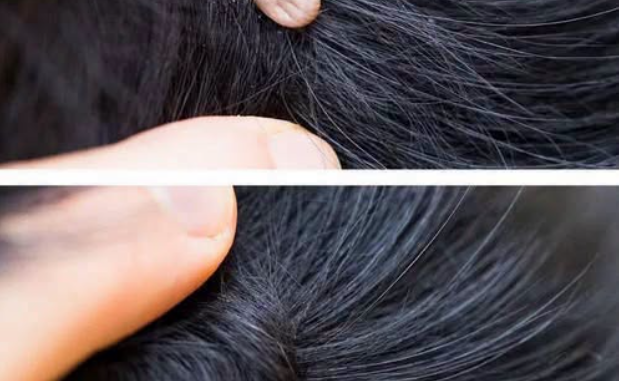
Finding something unusual in your child’s hair or on the scalp can be worrying, especially when you are not sure whether it is something harmless or something that needs medical attention.
One term that can cause confusion online is “HT7.” Despite sometimes appearing in searches related to health, HT7 is not a diagnosis for a hair or scalp condition. It refers to an acupuncture point called Shenmen, located on the wrist on the little-finger side.
That means if you have actually noticed flakes, bumps, redness, scaling, or an unusual area of hair loss on your child’s scalp, HT7 is not likely to explain what you are seeing.
Instead, several common childhood scalp conditions could be responsible.
Common Causes of Scalp Changes in Children
Cradle Cap
For babies, one of the most common causes of scalp scaling is cradle cap, a form of seborrheic dermatitis.
It can produce greasy or flaky scales on the scalp and may sometimes extend behind the ears. Although the appearance can be concerning to parents, cradle cap is generally a common childhood condition and often improves with time.
Gentle washing and careful care of the scalp are usually preferred over aggressive scratching or picking at the scales.
If the scalp becomes very inflamed, develops sores, or does not improve, a pediatrician or dermatologist can help determine whether something else is contributing to the problem.
Dandruff and Seborrheic Dermatitis
Older children and teenagers can develop dandruff or seborrheic dermatitis.
Parents may notice white or yellowish flakes, itching, or areas of irritated skin. Dandruff is common and does not necessarily mean that a child has poor hygiene.
Depending on the child’s age and the severity of the symptoms, a healthcare professional may recommend an appropriate shampoo or other treatment.
It is important not to assume that every flaky scalp is simply dandruff, particularly when there are additional symptoms such as hair loss, significant redness, pain, or swelling.
Folliculitis
Another possibility is folliculitis, which involves inflammation around hair follicles.
It may appear as small bumps and, in some cases, the bumps can contain pus. Irritation can contribute to folliculitis, and certain types of friction or hair-care practices may make the problem worse.
Avoiding unnecessary irritation and using gentle hair-care practices may help, but persistent or worsening bumps should be evaluated by a healthcare professional.
Eczema
Children can also develop atopic dermatitis, commonly called eczema, on or around the scalp.
Eczema may cause dry, itchy, irritated skin. Scratching can damage the skin and increase the risk of infection.
Because several childhood skin conditions can look similar, a doctor or dermatologist may need to examine the skin before recommending treatment.
Tinea Capitis — Scalp Ringworm
One condition that deserves particular attention is tinea capitis, commonly called scalp ringworm.
Despite its name, it is a fungal infection rather than a worm. It can cause scaly patches, itching, broken hairs, and areas of hair loss. It is also more common in children than in adults.
Unlike ordinary dandruff, scalp ringworm generally requires prescription antifungal treatment. Delaying treatment can allow the infection to continue or spread.
If your child develops a patch of unexplained hair loss along with scaling or inflammation, it is worth contacting a pediatrician or dermatologist rather than assuming it is ordinary dandruff.
When Should You Take Your Child to a Doctor?
Not every scalp problem requires an urgent appointment. Mild dandruff or temporary dryness may improve with appropriate basic care.
However, medical advice is particularly important if you notice:
- New areas of hair loss
- Broken hairs or black dots where hair has broken
- Significant redness or swelling
- Pain or tenderness
- Pus-filled bumps
- Open sores or crusting
- A rash that is spreading
- Persistent or severe itching
- Fever or your child appearing unwell
- Symptoms that continue despite appropriate basic care
Signs such as fever, spreading redness, painful swelling, or obvious infection should receive prompt medical attention.
Avoid Guessing From One Appearance
Scalp conditions can look surprisingly similar. A flaky patch might be dandruff, eczema, seborrheic dermatitis, or a fungal infection. A bump could have several possible causes.
That is why it is risky to diagnose a child’s scalp condition from a photograph or a short description alone.
It is also best to avoid experimenting with strong treatments, essential oils, or alternative remedies without knowing what is causing the problem. Some products can irritate already-sensitive skin and make the situation harder to manage.
A pediatrician or dermatologist can examine the scalp and determine whether testing or prescription treatment is necessary.
What About HT7?
HT7 itself is not a scalp diagnosis.
The term comes from acupuncture and Traditional Chinese Medicine, where it refers to a point on the wrist. It should therefore not be confused with a medical abbreviation describing something found in a child’s hair.
If you saw “HT7” while searching for information about your child’s scalp, you may simply have encountered unrelated information or a mix-up in an online search.
The more important question is what you can actually see on your child’s scalp.
If there is simply mild flaking, it may be something common and manageable. But if there is unexplained hair loss, significant inflammation, painful bumps, or signs of infection, getting a professional opinion is the safest approach.
Final Thoughts
Seeing something unusual in your child’s hair can understandably make a parent concerned. Fortunately, many childhood scalp conditions are common and treatable.
The key is not to rely on a confusing term found online. Instead, pay attention to the actual symptoms and how they change over time.
If the scalp looks unusual, symptoms are persistent, or you are simply unsure what you are seeing, a pediatrician or dermatologist can provide a much more reliable answer than an internet search.
A proper diagnosis can also prevent unnecessary treatments and ensure that a condition requiring medication is treated appropriately.
Leave a Reply