
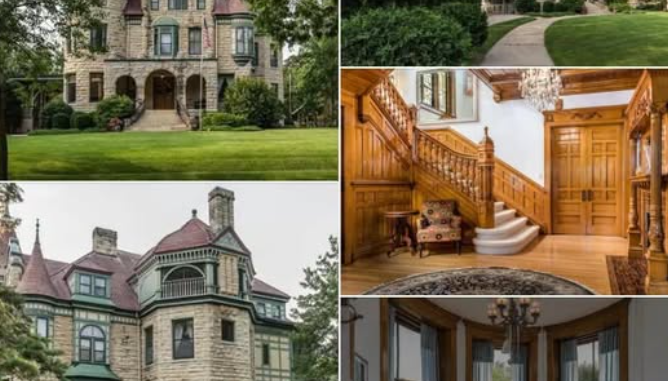
Historic houses have a way of making ordinary spaces feel connected to another era. Long before modern open-plan construction and standardized floor plans became common, many large homes were designed around craftsmanship, formal entertaining, and generous living spaces.
An estate dating back to 1892 offers a particularly interesting glimpse into that period. With eight bedrooms and nine bathrooms, the property combines the scale of a substantial residence with architectural character that is difficult to reproduce in a newly built home.
While modern improvements can make an older property more comfortable, the details that give a historic house its identity often come from the original construction.
A Home From a Different Era
The late 19th century was an important period in American residential architecture. Large homes were frequently built with substantial materials, detailed woodwork, decorative trim, tall ceilings, and carefully planned rooms.
A house constructed in 1892 belongs to a period when many architectural details were created by skilled craftspeople rather than mass-produced in the way many modern components are today.
That craftsmanship can give an older property a distinctive appearance.
Decorative moldings, wood floors, staircases, doors, fireplaces, built-in features, and other architectural elements can all contribute to a sense of character.
For prospective owners, these features can be part of what makes a historic property appealing. They provide visual details and textures that are often difficult to duplicate in contemporary construction.
Eight Bedrooms Create Plenty of Possibilities
The estate’s eight bedrooms make it considerably larger than the typical family home.
A property with that many bedrooms could accommodate a large household, extended family, or frequent guests. It could also allow owners to dedicate individual rooms to purposes beyond sleeping.
Depending on the layout, some bedrooms could potentially become offices, libraries, art studios, exercise rooms, guest rooms, or hobby spaces.
This flexibility can be especially valuable for people whose needs change over time.
A growing family might use the rooms differently than an empty-nest household, while someone working from home could transform part of the residence into a private workspace.
The nine bathrooms also provide an important practical advantage. In a large house, having multiple bathrooms can make daily routines considerably easier, particularly when several people are living in or visiting the property at the same time.
Spaces Designed for Gathering
Historic estates of this size were often designed with entertaining in mind.
Large common rooms could accommodate family gatherings, dinners, celebrations, and visits from friends or neighbors. Rather than every room serving a single narrow purpose, larger homes often created a sequence of spaces that could be used in different ways.
Large windows can further enhance these rooms by bringing natural light into the interior.
During the day, sunlight can highlight architectural details such as woodwork, trim, flooring, and ceiling features. These small details can make an older home feel very different from a newly constructed property with more standardized finishes.
The result is a residence that can feel both substantial and personal.
Preserving the Character of the Kitchen
The kitchen is often one of the most important areas when evaluating an older property.
Historic homeowners face an interesting choice: preserve the existing character as much as possible, modernize the space for contemporary use, or combine the two approaches.
A renovation does not necessarily have to remove every historic feature.
Modern appliances, improved storage, updated lighting, and new fixtures can sometimes be introduced while retaining architectural elements that help preserve the home’s original identity.
Finding that balance can be one of the most rewarding parts of renovating a historic property.
Details That Tell the Story
One of the strongest qualities of an older estate is the presence of details that reflect the period in which it was built.
Decorative staircases can become architectural focal points. Original woodwork can provide warmth and texture. Built-in cabinetry can combine practical storage with historical character.
Even elements that might appear ordinary at first glance can reveal something about the craftsmanship of the period.
For a new owner, preserving these details can mean more than simply maintaining the appearance of the house. It can help retain part of the property’s history.
At the same time, historic homes require careful evaluation. Older construction can involve maintenance requirements that differ from those of newer houses, including electrical systems, plumbing, roofing, insulation, windows, and structural components.
A professional inspection is therefore especially important before making major renovation decisions.
The Appeal of Outdoor Space
The experience of a historic estate is not limited to its interior.
Properties of this scale often benefit from mature landscaping and outdoor areas that complement the architecture.
Gardens, patios, walkways, courtyards, trees, and open areas can create additional spaces for relaxing or entertaining.
Mature trees can also contribute significantly to the property’s visual appeal. Unlike newly planted landscaping, established vegetation can give an older property an immediate sense of permanence.
When carefully maintained, the exterior can reinforce the feeling that the house has developed alongside its surroundings over many decades.
Why Historic Homes Continue to Attract Buyers
Modern construction offers many advantages, including energy efficiency, contemporary layouts, and updated systems.
Historic homes offer something different.
They provide individuality.
A newly constructed house may be designed to meet current preferences, but an older estate can carry visible evidence of the people and craftsmanship that came before its current owners.
That sense of history is one reason some buyers are willing to take on the additional responsibilities associated with an older property.
Owning a historic home can involve restoration, maintenance, and careful decision-making. Changes need to be considered not only for their appearance but also for how they interact with the home’s existing structure.
For the right owner, however, that responsibility can become part of the experience.
A Property With Room to Evolve
One of the most appealing aspects of an eight-bedroom estate is its ability to adapt.
A large family might prioritize bedrooms and shared living spaces. Another owner could create dedicated offices, guest accommodations, entertainment rooms, or creative spaces.
The same house can therefore serve very different lifestyles without requiring a complete change in its basic character.
That adaptability is particularly valuable in a historic property because it allows the building to remain useful while preserving elements of its past.
Restoration and Modern Comfort Can Coexist
There is sometimes a misconception that owning a historic house means choosing between authenticity and modern convenience.
In reality, thoughtful renovation can allow both to exist together.
Modern heating and cooling systems, updated electrical infrastructure, improved insulation, contemporary kitchens, and renovated bathrooms can make an older home more practical.
At the same time, owners can preserve important architectural features such as original floors, trim, doors, staircases, and other decorative elements.
The goal is not necessarily to freeze a house in time.
Instead, a successful restoration can allow an old property to continue functioning as a comfortable modern home while respecting its architectural history.
A Living Piece of History
An 1892 estate with eight bedrooms and nine bathrooms is more than a large residential property.
It represents a period when homes were often designed with an emphasis on craftsmanship, permanence, and formal living.
Every generation that occupies such a house adds another chapter to its story.
For potential buyers, the appeal may come from many different directions: the scale of the property, the flexibility of its rooms, the craftsmanship of its historic details, or simply the opportunity to live somewhere with a distinctive sense of identity.
Historic homes are not without challenges. They can require careful maintenance and thoughtful renovation, and buyers should always investigate the property’s structural condition, systems, permits, and ongoing costs before making a decision.
But when properly cared for, a house built more than a century ago can continue serving a modern purpose.
The greatest attraction may be that combination of past and present: a home with a long history, yet enough space and flexibility to become the setting for an entirely new chapter.
Leave a Reply