
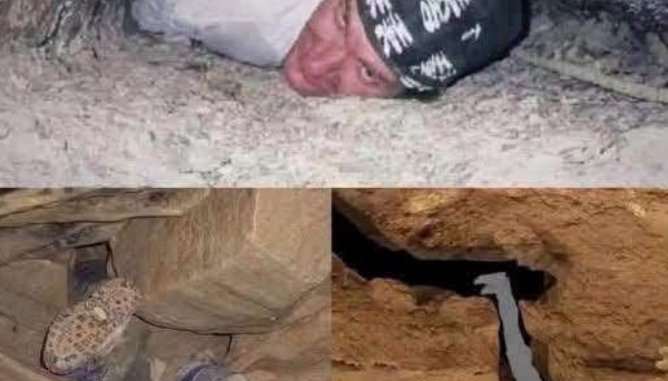
The first person to notice the man was not a professional rescuer. It was an ordinary hiker named Daniel, who happened to be walking along a familiar trail one Saturday morning.
Daniel regularly followed the same route through the hills outside town. He knew the tall pine trees near the entrance, the small wooden bridge over the stream, and the rocky overlook farther along the trail.
For him, those weekend walks were a peaceful break from the busy pace of everyday life.
But that morning, something was different.
A Sound Along the Trail
As Daniel continued along the path, he noticed something unusual.
At first, he thought he had heard a branch moving in the wind. He stopped and listened carefully.
The trail was unusually quiet.
Then he heard it again—a faint voice coming from somewhere beyond the main path.
Daniel looked toward the trees.
The sound seemed to be coming from a lower section of the hillside, an area that was not easy to see from the trail.
Rather than continuing on, he decided to investigate.
After carefully making his way through the trees, Daniel discovered a man sitting on the ground several feet away from the main trail.
The man appeared to be having difficulty getting back to his feet.
Daniel immediately approached, but he knew he needed to be careful.
The First Few Minutes Mattered
Daniel asked the man whether he could hear him and whether he needed emergency assistance.
The man was conscious and able to respond, but it was clear that he was struggling.
Daniel did not know exactly what had happened.
There was no obvious way to determine from a quick glance whether the man had suffered an injury, become exhausted, lost his footing, or experienced another problem.
Instead of attempting to move him unnecessarily, Daniel stayed nearby and contacted emergency services.
That simple decision became one of the most important parts of the rescue.
In an outdoor emergency, an injured person may have a condition that is not immediately visible. Moving someone without knowing what is wrong can sometimes make an injury worse.
Daniel’s priority was therefore to keep the man as comfortable and safe as possible while waiting for trained help.
Waiting for the Rescue Team
The familiar trail suddenly felt very different.
Daniel had walked through the area many times, but now he was paying attention to every detail.
He tried to keep the man calm while providing emergency responders with information about their location.
The surrounding terrain presented an additional challenge.
The man was not directly beside the main trail, meaning rescuers would need to reach him and determine the safest way to bring him back.
Daniel remained with him rather than leaving the area.
For someone waiting for help in an unfamiliar or difficult location, having another person nearby can make an enormous difference.
Help Finally Arrives
Eventually, the sound of approaching rescuers could be heard through the trees.
The professionals reached the location and began assessing the man’s condition.
From that point forward, the situation was handled by people trained to deal with emergencies in difficult outdoor environments.
They carefully evaluated the man before deciding how to move him.
Daniel stepped back and allowed the rescue team to take over, but he remained available to explain exactly where he had found the man and what he had observed before help arrived.
The process was not dramatic in the way movies often portray rescues.
There were no impossible feats or sudden miracles.
Instead, there was communication, patience, careful assessment, and teamwork.
Those ordinary actions were what ultimately mattered.
The Part Daniel Never Expected
What stayed with Daniel afterward was not simply that he had discovered someone who needed help.
It was how quickly an ordinary morning had changed.
He had started his hike expecting nothing more than a quiet walk through an area he already knew well.
Within minutes, he found himself in a situation where another person’s safety depended on someone noticing that something was wrong.
Daniel later reflected on how easily he could have ignored the faint sound.
He might have assumed it was an animal, the wind, or another harmless noise.
Instead, he stopped.
That decision allowed him to discover someone who needed assistance.
A Reminder for Other Hikers
The story also highlights an important principle for people who spend time outdoors: paying attention can matter.
Hikers do not need to become professional rescuers to help someone in trouble.
If you encounter a person who appears injured or seriously unwell, the safest approach is generally to assess the situation from a safe position, contact local emergency services when appropriate, provide your location as accurately as possible, and follow instructions from trained responders.
People should also avoid putting themselves in danger.
A rescue attempt can become more complicated if the person trying to help becomes injured as well.
Carrying a fully charged phone, telling someone where you are going, staying on marked trails when possible, and carrying basic supplies can all make outdoor trips safer.
One Ordinary Choice Made a Difference
Daniel’s hike began like any other.
The trail was familiar. The morning was quiet. Nothing suggested that the day would become memorable.
But one small decision changed everything.
He heard something unusual, stopped walking, and took the time to find out what was happening.
The rest was handled by trained rescuers, but Daniel’s decision to pay attention gave them the opportunity to reach the man sooner.
Sometimes, unforgettable moments do not begin with dramatic events.
They begin with something much simpler—a person noticing that something is not quite right and deciding not to walk away.
For Daniel, a routine Saturday hike became a reminder that awareness, patience, and a willingness to help can matter when someone unexpectedly needs assistance.
Leave a Reply