
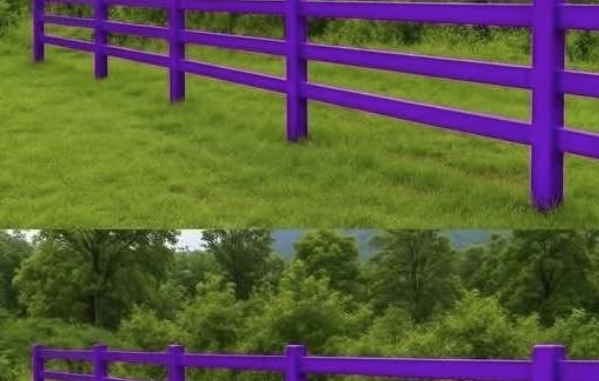
Have you ever been driving through the countryside or walking along a wooded trail and noticed bright purple markings on trees or fence posts?
At first, they might seem completely ordinary.
Perhaps you assume someone painted the fence for decoration. Maybe you think the landowner simply prefers the color purple.
But in some parts of the United States, those markings can communicate something much more practical.
They may indicate that the land is privately owned and that people should not enter without permission.
These markings are commonly associated with what are known as purple paint laws. The exact requirements and legal meaning vary from state to state, but the basic concept is designed to give property owners another way to identify their boundaries.
For hikers, hunters, campers, cyclists, and anyone exploring unfamiliar rural areas, recognizing these markings can help prevent accidental trespassing.
Why Is Purple Paint Used?
A natural question is why purple was chosen instead of another color.
One reason is visibility.
Purple can stand out against many outdoor backgrounds, including green leaves, brown tree trunks, dry grass, and wooden fencing. A clearly applied marking can remain noticeable even when traditional signs are difficult to see.
Paint can also offer a practical alternative to repeatedly replacing signs.
Outdoor signs can be damaged by weather, fallen branches, animals, or general exposure. Over time, lettering can fade and signs can become difficult to read.
A properly maintained paint marking may provide another way for a property owner to communicate a boundary.
However, this doesn’t mean every purple mark you see has legal significance.
The surrounding circumstances and local laws matter.
What Does Purple Paint Mean?
Where a purple-paint statute applies, the markings generally serve as a notice that the property is private and entry may be prohibited without authorization.
That can be especially useful in rural locations where property boundaries aren’t obvious.
A large forest, field, or undeveloped piece of land may have no conventional fence separating it from a nearby road or trail.
A series of markings can make the boundary easier to recognize.
Still, purple paint should not be treated as a universal trespassing symbol throughout the country.
States can establish different requirements concerning the size of markings, their placement, spacing, height, and the surfaces where they may legally appear.
Some jurisdictions may recognize the markings under specific conditions, while others may use different methods for providing legal notice.
That’s why local regulations are important.
Why Would a Property Owner Use Paint Instead of Signs?
Imagine owning a large wooded property that stretches for hundreds or even thousands of acres.
Putting traditional signs around every section of the boundary could require considerable time and maintenance.
Signs can also be knocked down, covered by vegetation, stolen, or damaged.
Paint markings may provide a simpler way to identify portions of a property line.
For that reason, some landowners may choose to use marked trees or fence posts as part of their boundary-notification system.
You may see markings placed along a line rather than on every visible tree.
Several similar purple marks appearing at relatively consistent intervals can be a useful clue that you’re looking at an intentional boundary marker rather than decoration.
Where Are These Markings Commonly Found?
Purple paint associated with property boundaries may appear in rural or wooded environments.
Common locations can include:
- Tree trunks near property lines
- Wooden fence posts
- Gate posts
- Other permanent structures along a boundary
The appearance of the markings can vary depending on local requirements.
A painted tree doesn’t automatically mean the entire surrounding area is off-limits. The important question is whether the marking is being used to identify a property boundary under the rules of that particular jurisdiction.
What Should Hikers Do?
If you’re hiking and encounter a series of purple markings, don’t simply assume you can continue walking.
Pause and determine where the boundary appears to be.
If you’re on an established public trail, check your map and follow official trail markings. A trail that looks like it continues through the woods isn’t necessarily a public route.
Old roads, logging paths, farm tracks, and informal footpaths can sometimes look like hiking trails even though they cross private land.
If you’re uncertain, staying on a clearly identified public route is the safest choice.
You can also check official trail maps or information provided by the relevant park or land-management authority.
Hunters Should Be Especially Careful
Hunters often travel through large wooded areas where property boundaries can be difficult to recognize.
A forest may appear continuous even though ownership changes several times within a relatively short distance.
That makes boundary awareness particularly important.
Before entering land for hunting, make sure you understand who owns it and whether you have permission to be there.
A visible boundary marking should never be ignored simply because there isn’t a physical fence.
Hunting and land-access regulations can also vary considerably by location, so hunters should consult the applicable wildlife and property-access rules before entering unfamiliar areas.
No Fence Doesn’t Mean Public Land
One of the easiest mistakes to make in the countryside is assuming that unfenced land is public.
It isn’t.
Private property can include forests, fields, farmland, hillsides, vacant lots, and undeveloped acreage.
There may be no obvious structure separating private land from a public road.
That’s why signs, maps, boundary markers, and other notices are important.
If you see a series of deliberate markings along the edge of an otherwise open area, it’s worth paying attention rather than assuming the land is available for public use.
Not Every Purple Fence Means “Keep Out”
Context is important.
Purple paint isn’t automatically a legal property notice everywhere.
A homeowner might paint a fence purple simply because they enjoy the color. A business could use purple as part of its branding. A garden might contain colorful decorative posts.
The pattern and location can provide useful clues.
For example, repeated markings along trees or posts in a remote wooded area are more suggestive of a boundary system than a brightly painted decorative fence around a suburban property.
Even then, local law determines the actual legal significance.
Why Respecting Boundaries Matters
Following property boundaries isn’t only about avoiding possible legal problems.
Private rural land can contain hazards that visitors don’t expect.
There may be farm machinery, livestock, construction equipment, hunting activity, steep terrain, ponds, or other potentially dangerous areas.
An unexpected visitor can also disturb animals, crops, or ongoing work.
Respecting property boundaries helps prevent conflicts and protects both visitors and landowners.
What If You Enter by Accident?
Getting turned around in an unfamiliar wooded area can happen.
If you realize you’ve crossed onto private property unintentionally, the sensible response is to leave rather than continue exploring.
Retrace your route if you can do so safely and return to the public area.
If a property owner approaches you, remain calm and explain that you entered accidentally.
There is rarely a good reason to turn an honest mistake into a confrontation.
Check the Rules Where You Live
Because purple-paint laws aren’t identical across the United States, don’t rely solely on something you read online.
If you regularly hike, hunt, fish, camp, or explore rural areas, check information from the appropriate state or local authorities.
Depending on where you are, useful sources may include state wildlife agencies, natural-resource departments, local governments, parks, and land-management offices.
These sources can clarify whether purple markings have a specific legal meaning and what requirements apply.
A Small Mark Can Communicate a Big Message
The next time you see purple paint on a tree or fence post while traveling through the countryside, take a moment to look around.
It might be nothing more than decoration.
But it could also be an intentional boundary notice.
The important lesson isn’t that purple paint always means the same thing.
It’s that small markings can communicate information about land ownership and access, and ignoring them can lead to unnecessary problems.
When exploring unfamiliar rural areas, stay alert, follow official signs and trails, and respect boundaries.
A simple painted stripe may not look important at first.
But depending on where you are, it could be a quiet reminder that the land beyond that point belongs to someone—and permission may be required before you enter.
Leave a Reply